Eczema /

Eczema /

Triggers /

Triggers /

Yeast

Yeast

Fermented Foods

Yeast & Eczema

A key underrecognised trigger, especially for head, face, and neck eczema. Dietary yeast cross-reacts with Malassezia skin yeast, maintaining chronic inflammation. Found in bread, beer, wine, Marmite, nutritional yeast, and kombucha.

🎯 Symphony Trigger Score

🎯 Symphony Trigger Score

5/5
Premium UX Template for Framer

Summary

Summary

Yeast is one of the most important and underrecognised eczema triggers, particularly for people whose eczema is concentrated on the head, face, and neck. Baker's and brewer's yeast (Saccharomyces cerevisiae) shares cross-reactive proteins with Malassezia, a yeast that naturally lives on everyone's skin. In people with eczema, the immune system can become hyper-reactive to Malassezia — and consuming dietary yeast provides proteins similar enough that the immune system treats them as the same threat, maintaining chronic inflammation.

About 73% of people with severe eczema have detectable immune reactivity to Malassezia. When dietary yeast is reduced alongside antifungal treatment, some see significant improvement. Yeast appears in bread, beer, wine, Marmite, nutritional yeast (used as a dairy-free flavouring), fermented foods, and kombucha — making it a common but easy-to-overlook source of daily exposure.

Yeast is one of the most important and underrecognised eczema triggers, particularly for people whose eczema is concentrated on the head, face, and neck. Baker's and brewer's yeast (Saccharomyces cerevisiae) shares cross-reactive proteins with Malassezia, a yeast that naturally lives on everyone's skin. In people with eczema, the immune system can become hyper-reactive to Malassezia — and consuming dietary yeast provides proteins similar enough that the immune system treats them as the same threat, maintaining chronic inflammation.

About 73% of people with severe eczema have detectable immune reactivity to Malassezia. When dietary yeast is reduced alongside antifungal treatment, some see significant improvement. Yeast appears in bread, beer, wine, Marmite, nutritional yeast (used as a dairy-free flavouring), fermented foods, and kombucha — making it a common but easy-to-overlook source of daily exposure.

The Details - Yeast & Eczema

The Details - Yeast & Eczema

Reaction Timeline

Delayed (12–72 hours), Cumulative (days of repeated exposure)

Delayed (12–72 hours), Cumulative (days of repeated exposure)

Yeast-Malassezia cross-reactive immune responses are not immediate anaphylaxis-type reactions. They drive chronic, smoldering inflammation — particularly around the head, neck, and upper trunk where Malassezia is most dense. Eliminating dietary yeast may take weeks to show improvement because you are reducing the immune stimulus to an organism already living on your skin.


Premium UX Template for Framer

How Much Is Needed To React?

Cumulative

A single piece of bread is unlikely to cause a dramatic flare. Daily bread, beer, nutritional yeast, and other yeast-containing foods provide steady immune stimulation against the same epitopes present on skin Malassezia. The improvement from yeast elimination is gradual (weeks) and may be enhanced by concurrent antifungal treatment of the skin.

Does Preparation Matter?

Minimal difference

The cross-reactive proteins (mannan, MnSOD, thioredoxin) are present in all forms of Saccharomyces — live, heat-killed, extracted. Baking kills yeast but does NOT destroy the allergenic proteins. Nutritional yeast (heat-inactivated) is equally problematic. There is no preparation method that eliminates the cross-reactive epitopes. [5]

Premium UX Template for Framer

Also Watch Out For...

  1. Malassezia skin yeast — the primary cross-reactive partner; shared mannan, MnSOD, thioredoxin [5][6]

  2. Candida albicans — shared mannan epitopes with both Saccharomyces and Malassezia [7]

  3. Mushrooms — shared MnSOD and fungal enzymes

  4. Molds (Alternaria, Aspergillus) — shared fungal protein families

What To Use Instead

  1. Flatbreads and tortillas (unleavened — no yeast)

  2. Soda bread (leavened with baking soda, not yeast)

  3. Rice cakes and crackers (no yeast)

  4. Quick breads and muffins (baking powder leavened)

Premium UX Template for Framer

Hidden Sources

  1. Bread (all yeast-risen breads, rolls, baguettes)

  2. Sourdough (wild yeast + bacteria)

  3. Beer and ale (brewer's yeast)

  4. Wine (fermentation yeast)

  5. Nutritional yeast (popular vegan seasoning)

  6. Marmite and Vegemite (yeast extract)

  7. Soy sauce, miso, tempeh (fungal fermentation)

  8. Kombucha (yeast + bacteria)

  9. B-vitamin supplements (many derived from yeast)

  10. Saccharomyces boulardii probiotics

  11. Vinegar (acetic fermentation involves yeast stage)

  12. Aged cheese (yeast in rind development)

  13. Dried fruits (yeast on surface)

  14. Grapes and plums (wild yeast bloom on skin)
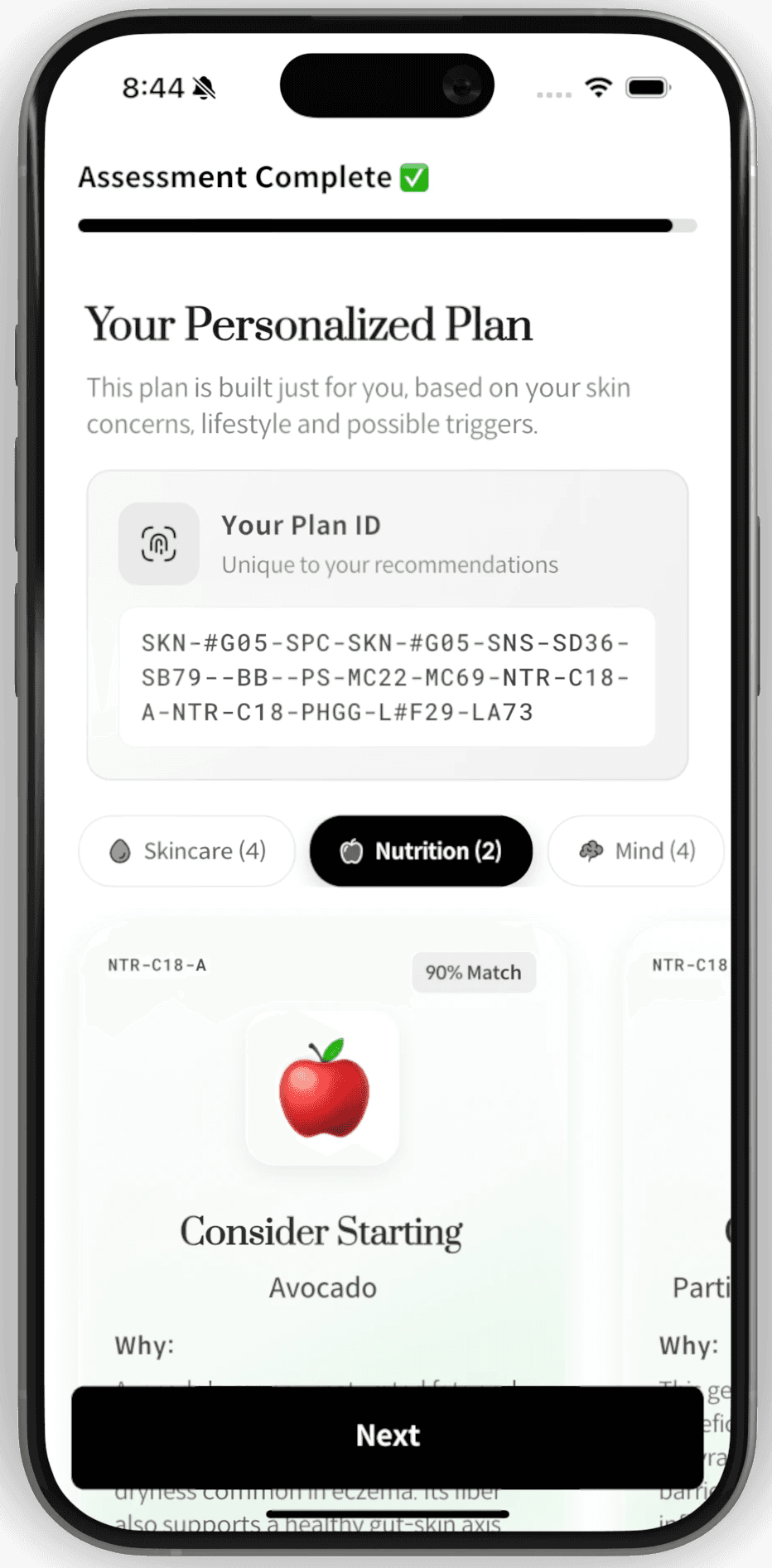
Symphony helps you know if Yeast is your why.

Symphony helps you know if Yeast is your why.

Symphony connects the dots between your skin condition and thousands of potential triggers, so you get a personalized plan to achieve lasting change.

Symphony connects the dots between your skin condition and thousands of potential triggers, so you get a personalized plan to achieve lasting change.

Symptom Improvement

Symptom Improvement

Symptom Improvement

>34%

>34%

>34%

Find a trigger within 7 days

Find a trigger within 7 days

Find a trigger within 7 days

92%

92%

92%

Premium UX Template for Framer

This content is for informational purposes only and is not medical advice. Food triggers are highly individual — a food appearing in this database does not mean it will cause your eczema to flare. The information presented is drawn from published clinical research and patient community reports, but it is not a substitute for professional diagnosis or treatment. If you suspect a food allergy or sensitivity, consult a dermatologist or allergist. The gold standard for identifying food triggers remains a supervised elimination diet with oral food challenges. Symphony is a tracking tool, not a diagnostic or medical device.

This content is for informational purposes only and is not medical advice. Food triggers are highly individual — a food appearing in this database does not mean it will cause your eczema to flare. The information presented is drawn from published clinical research and patient community reports, but it is not a substitute for professional diagnosis or treatment. If you suspect a food allergy or sensitivity, consult a dermatologist or allergist. The gold standard for identifying food triggers remains a supervised elimination diet with oral food challenges. Symphony is a tracking tool, not a diagnostic or medical device.