Eczema /

Eczema /

Triggers /

Triggers /

Wheat bread

Wheat bread

Grains

Wheat bread & Eczema

A top-tier eczema trigger found in bread, crackers, cereals, and hidden in soy sauce, processed meats, and dressings. Sourdough is better tolerated than regular bread for some people.

🎯 Symphony Trigger Score

🎯 Symphony Trigger Score

5/5
Premium UX Template for Framer

Summary

Summary

Wheat triggers eczema through two different pathways. First, it contains proteins that the immune system can directly react to, causing classic allergic inflammation.

Second, wheat contains compounds called ATIs (amylase-trypsin inhibitors) that activate inflammation in the gut lining even in people without a true wheat allergy — essentially irritating the immune system's first line of defence. This double mechanism means wheat can cause both immediate reactions (within 2 hours) and a slower, cumulative inflammation from daily consumption that keeps eczema simmering at a low level. Sourdough fermentation breaks down 20–50% of these inflammatory ATI compounds, which is why some wheat-sensitive people tolerate sourdough better than regular bread. Wheat hides in many unexpected places including soy sauce, processed meats, and some salad dressings.

Wheat triggers eczema through two different pathways. First, it contains proteins that the immune system can directly react to, causing classic allergic inflammation.

Second, wheat contains compounds called ATIs (amylase-trypsin inhibitors) that activate inflammation in the gut lining even in people without a true wheat allergy — essentially irritating the immune system's first line of defence. This double mechanism means wheat can cause both immediate reactions (within 2 hours) and a slower, cumulative inflammation from daily consumption that keeps eczema simmering at a low level. Sourdough fermentation breaks down 20–50% of these inflammatory ATI compounds, which is why some wheat-sensitive people tolerate sourdough better than regular bread. Wheat hides in many unexpected places including soy sauce, processed meats, and some salad dressings.

The Details - Wheat bread & Eczema

The Details - Wheat bread & Eczema

Reaction Timeline

Immediate (minutes to 2 hours), Delayed (12–72 hours), Cumulative (days of repeated exposure)

Immediate (minutes to 2 hours), Delayed (12–72 hours), Cumulative (days of repeated exposure)

IgE reactions to gliadin occur within 2 hours. ATI-driven inflammation is slower and cumulative — daily bread consumption may cause a steady background flare that only resolves after several days of elimination.


Premium UX Template for Framer

How Much Is Needed To React?

Dose-dependent

Many wheat-allergic individuals tolerate small amounts. A crouton on a salad is very different from a sandwich. Sourdough bread may be better tolerated due to ATI degradation during fermentation. Track how much wheat you eat daily — the cumulative load matters.

Does Preparation Matter?

Yes — preparation significantly changes reactivity

Sourdough fermentation degrades ATIs and reduces pro-inflammatory activity by 20–50%. Standard baking has inconsistent effects on allergenicity. Boiling pasta may leach some water-soluble allergens. However, omega-5 gliadin and LTP are heat-stable, so cooking does not eliminate IgE-mediated risk. [20]


Premium UX Template for Framer

Also Watch Out For...

  1. Rye — high cross-reactivity; γ-secalins cross-react with ω-5 gliadin [21]

  2. Barley — high cross-reactivity; γ-3 hordein cross-reacts with ω-5 gliadin [21]

  3. Oats — moderate cross-reactivity (~33% of wheat-allergic patients) [22]

  4. Grass pollen — profilin and other shared allergens

What To Use Instead

  1. Rice bread (widely available, typically well-tolerated)

  2. Sourdough bread (if ATI-driven rather than IgE — test carefully; still contains wheat)

  3. Buckwheat flour for pancakes/baking (note: buckwheat is on the trigger list but is NOT related to wheat)

  4. Cassava/tapioca flour for baking

Premium UX Template for Framer

Hidden Sources

  1. Soy sauce (wheat is a primary ingredient)

  2. Beer (barley and sometimes wheat)

  3. Processed meats (wheat as binder/filler)

  4. Salad dressings (wheat-based thickeners)

  5. Gravy and roux-based sauces

  6. Breaded/battered foods

  7. Couscous (made from wheat)

  8. Seitan (pure wheat gluten)

  9. Many breakfast cereals

  10. Communion wafers

  11. Play-Doh (contains wheat — relevant for children with AD)
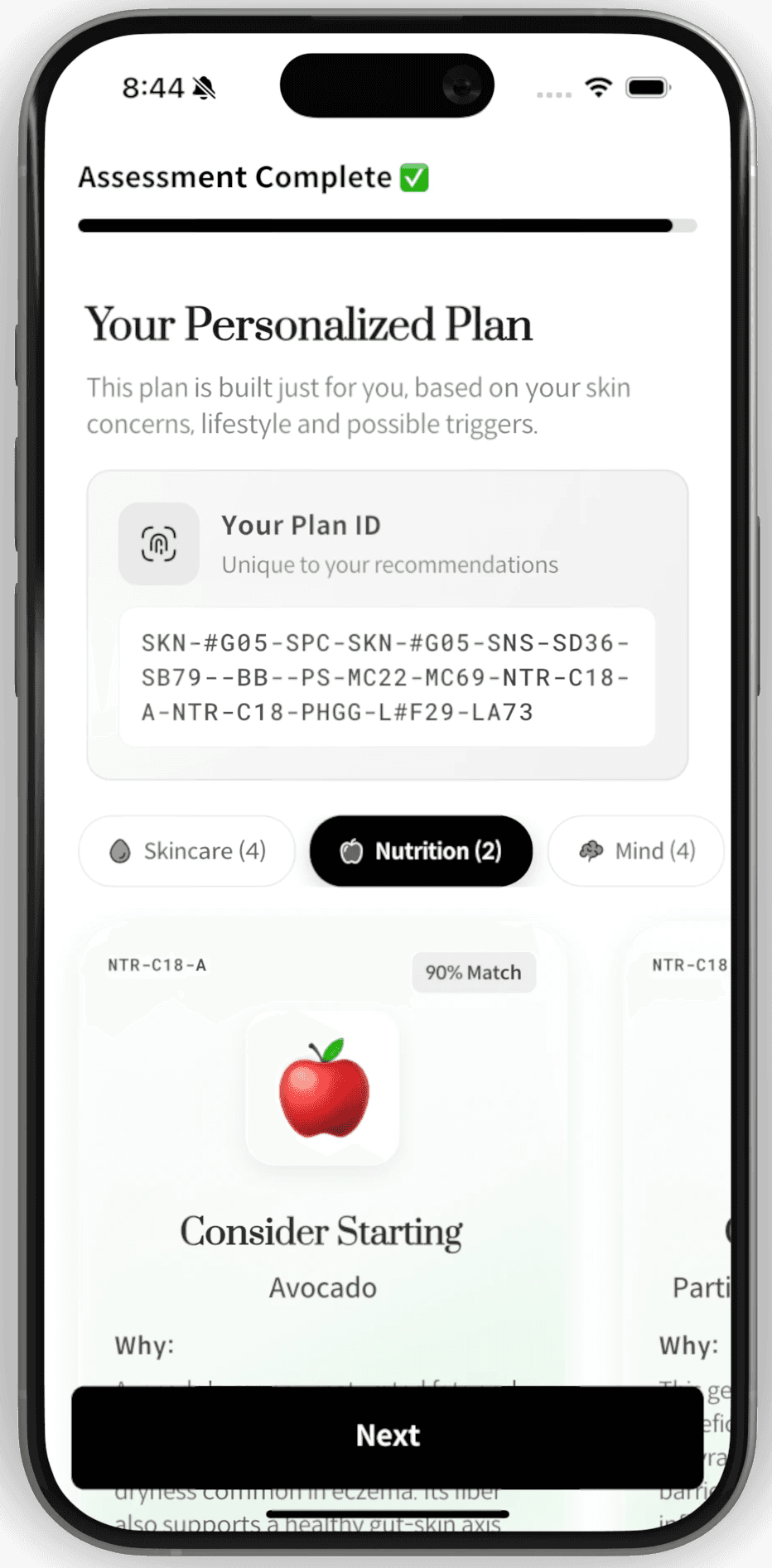
Symphony helps you know if Wheat bread is your why.

Symphony helps you know if Wheat bread is your why.

Symphony connects the dots between your skin condition and thousands of potential triggers, so you get a personalized plan to achieve lasting change.

Symphony connects the dots between your skin condition and thousands of potential triggers, so you get a personalized plan to achieve lasting change.

Symptom Improvement

Symptom Improvement

Symptom Improvement

>34%

>34%

>34%

Find a trigger within 7 days

Find a trigger within 7 days

Find a trigger within 7 days

92%

92%

92%

Premium UX Template for Framer

This content is for informational purposes only and is not medical advice. Food triggers are highly individual — a food appearing in this database does not mean it will cause your eczema to flare. The information presented is drawn from published clinical research and patient community reports, but it is not a substitute for professional diagnosis or treatment. If you suspect a food allergy or sensitivity, consult a dermatologist or allergist. The gold standard for identifying food triggers remains a supervised elimination diet with oral food challenges. Symphony is a tracking tool, not a diagnostic or medical device.

This content is for informational purposes only and is not medical advice. Food triggers are highly individual — a food appearing in this database does not mean it will cause your eczema to flare. The information presented is drawn from published clinical research and patient community reports, but it is not a substitute for professional diagnosis or treatment. If you suspect a food allergy or sensitivity, consult a dermatologist or allergist. The gold standard for identifying food triggers remains a supervised elimination diet with oral food challenges. Symphony is a tracking tool, not a diagnostic or medical device.