Eczema /

Eczema /

Triggers /

Triggers /

Cheese (soft/fresh)

Cheese (soft/fresh)

Dairy

Dairy

Dairy

Soft & Fresh Cheese & Eczema

Mozzarella, ricotta, and cottage cheese still contain dairy proteins but have much less histamine than aged varieties. Often tolerated when aged cheese is not.

🎯 Symphony Trigger Score

🎯 Symphony Trigger Score

3/5

Premium UX Template for Framer

Summary

Summary

Summary

Fresh cheeses like mozzarella, ricotta, and cottage cheese contain the same milk proteins (casein and whey) that can trigger immune reactions and eczema flares in dairy-sensitive people.

Because they have not been aged, however, they contain very little histamine — the chemical that makes aged cheeses especially problematic. This makes fresh cheese a different proposition from Parmesan or blue cheese: many people who react to aged cheese can tolerate moderate amounts of fresh mozzarella. In clinical milk ladder protocols used to reintroduce dairy, baked fresh cheese (like mozzarella on pizza) is introduced before unheated dairy because the combination of heating and lower histamine makes it one of the more tolerable dairy forms. That said, people with a strong milk protein allergy will still react to fresh cheese because the core allergenic proteins remain.

Fresh cheeses like mozzarella, ricotta, and cottage cheese contain the same milk proteins (casein and whey) that can trigger immune reactions and eczema flares in dairy-sensitive people.

Because they have not been aged, however, they contain very little histamine — the chemical that makes aged cheeses especially problematic. This makes fresh cheese a different proposition from Parmesan or blue cheese: many people who react to aged cheese can tolerate moderate amounts of fresh mozzarella. In clinical milk ladder protocols used to reintroduce dairy, baked fresh cheese (like mozzarella on pizza) is introduced before unheated dairy because the combination of heating and lower histamine makes it one of the more tolerable dairy forms. That said, people with a strong milk protein allergy will still react to fresh cheese because the core allergenic proteins remain.

Fresh cheeses like mozzarella, ricotta, and cottage cheese contain the same milk proteins (casein and whey) that can trigger immune reactions and eczema flares in dairy-sensitive people.

Because they have not been aged, however, they contain very little histamine — the chemical that makes aged cheeses especially problematic. This makes fresh cheese a different proposition from Parmesan or blue cheese: many people who react to aged cheese can tolerate moderate amounts of fresh mozzarella. In clinical milk ladder protocols used to reintroduce dairy, baked fresh cheese (like mozzarella on pizza) is introduced before unheated dairy because the combination of heating and lower histamine makes it one of the more tolerable dairy forms. That said, people with a strong milk protein allergy will still react to fresh cheese because the core allergenic proteins remain.

The Details - Soft & Fresh Cheese & Eczema

The Details - Soft & Fresh Cheese & Eczema

The Details - Soft & Fresh Cheese & Eczema

Reaction Timeline

Immediate (minutes to 2 hours), Delayed (12–72 hours)

Immediate (minutes to 2 hours), Delayed (12–72 hours)

Fresh cheeses like mozzarella, ricotta, and cottage cheese trigger eczema through the same two pathways as other dairy products. An IgE-mediated (allergy) reaction can appear within minutes — often as hives, swelling, or immediate skin irritation. The more common pattern in eczema is a delayed, non-IgE-driven flare that typically peaks 12–72 hours after eating the cheese, making it genuinely difficult to identify the cause without a food diary. If your skin worsens a day or two after a meal containing these cheeses, dairy is still the likely culprit even though the reaction feels "slow".


Premium UX Template for Framer

How Much Is Needed To React?

Dose-dependent

Dose-dependent

Dose-dependent

Because histamine is low, the main variable is how much casein/whey protein you consume. A thin slice of mozzarella on a salad is less exposure than a ricotta-heavy lasagna. In the milk ladder, baked cheese is tested before unheated cheese.

Does Preparation Matter?

Yes — preparation significantly changes reactivity

Yes — preparation significantly changes reactivity

Yes — preparation significantly changes reactivity

Baked cheese in a wheat matrix (e.g., pizza baked at high heat) is better tolerated than unheated cheese due to whey protein denaturation. Proper refrigeration is essential — histamine rises quickly if fresh cheese sits at room temperature. Ricotta is whey-dominant and may be tolerated differently than casein-dominant cheeses. [5]

Premium UX Template for Framer

Also Watch Out For...

  1. Cow's milk — shares identical allergens

  2. Aged cheese — same allergens plus histamine

  3. Goat/sheep fresh cheeses — >90% casein cross-reactivity

What To Use Instead

  1. Dairy-free cream cheese (brands like Kite Hill, Miyoko's)

  2. Silken tofu blended smooth (ricotta substitute in lasagna — note: soy is a trigger for some)

  3. Hummus as a spread (note: chickpeas are on the trigger list)

Premium UX Template for Framer

Hidden Sources

  1. Mozzarella in frozen pizzas

  2. Ricotta in filled pastas (ravioli, lasagna)

  3. Cream cheese in bagel spreads and cheesecakes

  4. Cottage cheese in pre-made salads

  5. Queso fresco in Mexican dishes

  6. Brie/Camembert (soft but CAN have moderate histamine if ripened)
Symphony helps you know if Cheese (soft/fresh) is your why.

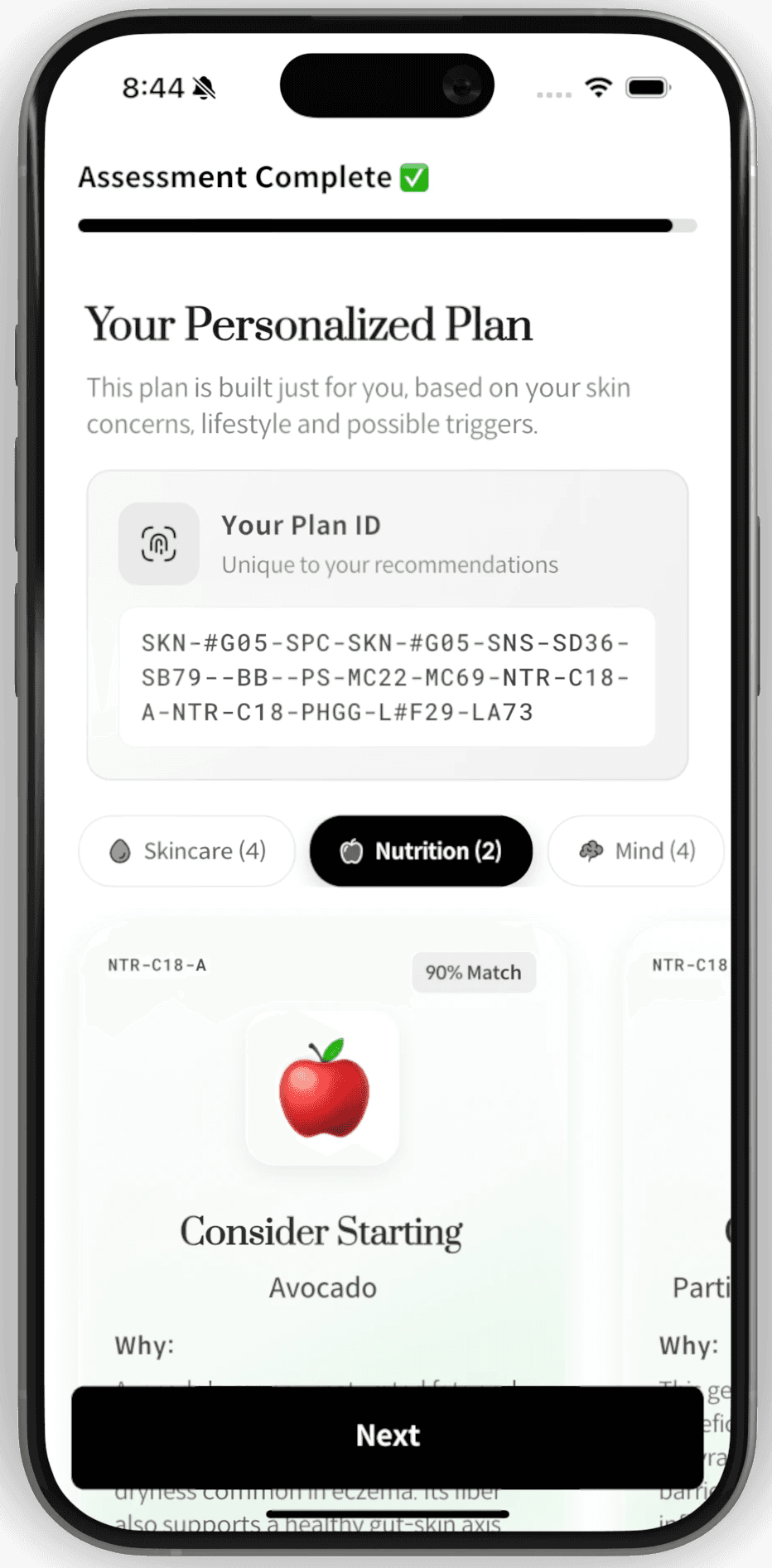
Symphony helps you know if Cheese (soft/fresh) is your why.

Symphony connects the dots between your skin condition and thousands of potential triggers, so you get a personalized plan to achieve lasting change.

Symphony connects the dots between your skin condition and thousands of potential triggers, so you get a personalized plan to achieve lasting change.

Symptom Improvement

Symptom Improvement

Symptom Improvement

>34%

>34%

>34%

Find a trigger within 7 days

Find a trigger within 7 days

Find a trigger within 7 days

92%

92%

92%

Premium UX Template for Framer

This content is for informational purposes only and is not medical advice. Food triggers are highly individual — a food appearing in this database does not mean it will cause your eczema to flare. The information presented is drawn from published clinical research and patient community reports, but it is not a substitute for professional diagnosis or treatment. If you suspect a food allergy or sensitivity, consult a dermatologist or allergist. The gold standard for identifying food triggers remains a supervised elimination diet with oral food challenges. Symphony is a tracking tool, not a diagnostic or medical device.

This content is for informational purposes only and is not medical advice. Food triggers are highly individual — a food appearing in this database does not mean it will cause your eczema to flare. The information presented is drawn from published clinical research and patient community reports, but it is not a substitute for professional diagnosis or treatment. If you suspect a food allergy or sensitivity, consult a dermatologist or allergist. The gold standard for identifying food triggers remains a supervised elimination diet with oral food challenges. Symphony is a tracking tool, not a diagnostic or medical device.

This content is for informational purposes only and is not medical advice. Food triggers are highly individual — a food appearing in this database does not mean it will cause your eczema to flare. The information presented is drawn from published clinical research and patient community reports, but it is not a substitute for professional diagnosis or treatment. If you suspect a food allergy or sensitivity, consult a dermatologist or allergist. The gold standard for identifying food triggers remains a supervised elimination diet with oral food challenges. Symphony is a tracking tool, not a diagnostic or medical device.