Eczema /

Eczema /

Triggers /

Triggers /

Shrimp

Shrimp

Shellfish

Shellfish

Shellfish

Shrimp & Eczema

Heat-stable allergen shared across all crustaceans (shrimp, crab, lobster). A key link: dust mite sensitisation through eczema skin can prime the immune system to later react to shellfish. Does not cross-react with fish.

🎯 Symphony Trigger Score

🎯 Symphony Trigger Score

4/5

Premium UX Template for Framer

Summary

Summary

Summary

Shrimp allergy is caused by a muscle protein called tropomyosin that is extremely heat-stable — no amount of cooking, boiling, frying, or grilling destroys it. This protein is found in all crustacean shellfish (shrimp, crab, lobster) and the proteins are so similar across species (92–98% identical) that allergy to one almost certainly means allergy to all of them.

A critical connection for eczema: dust mite tropomyosin shares about 80% of its structure with shrimp tropomyosin. Dust mites are a major environmental trigger for eczema, and researchers believe that being sensitised to dust mites through broken eczema skin can later trigger reactions to shellfish when eaten — this is thought to explain the unusually high rate of shellfish allergy in people with eczema. Shrimp does not cross-react with fish, so fish allergy and shellfish allergy are separate conditions.

Shrimp allergy is caused by a muscle protein called tropomyosin that is extremely heat-stable — no amount of cooking, boiling, frying, or grilling destroys it. This protein is found in all crustacean shellfish (shrimp, crab, lobster) and the proteins are so similar across species (92–98% identical) that allergy to one almost certainly means allergy to all of them.

A critical connection for eczema: dust mite tropomyosin shares about 80% of its structure with shrimp tropomyosin. Dust mites are a major environmental trigger for eczema, and researchers believe that being sensitised to dust mites through broken eczema skin can later trigger reactions to shellfish when eaten — this is thought to explain the unusually high rate of shellfish allergy in people with eczema. Shrimp does not cross-react with fish, so fish allergy and shellfish allergy are separate conditions.

Shrimp allergy is caused by a muscle protein called tropomyosin that is extremely heat-stable — no amount of cooking, boiling, frying, or grilling destroys it. This protein is found in all crustacean shellfish (shrimp, crab, lobster) and the proteins are so similar across species (92–98% identical) that allergy to one almost certainly means allergy to all of them.

A critical connection for eczema: dust mite tropomyosin shares about 80% of its structure with shrimp tropomyosin. Dust mites are a major environmental trigger for eczema, and researchers believe that being sensitised to dust mites through broken eczema skin can later trigger reactions to shellfish when eaten — this is thought to explain the unusually high rate of shellfish allergy in people with eczema. Shrimp does not cross-react with fish, so fish allergy and shellfish allergy are separate conditions.

The Details - Shrimp & Eczema

The Details - Shrimp & Eczema

The Details - Shrimp & Eczema

Reaction Timeline

Immediate (minutes to 2 hours)

Immediate (minutes to 2 hours)

Shrimp reactions are predominantly immediate and can be severe (anaphylaxis). Cooking vapors and steam from boiling shrimp can trigger airborne reactions in highly sensitized individuals.


Premium UX Template for Framer

How Much Is Needed To React?

Any amount

Any amount

Any amount

Trace amounts can trigger reactions in sensitized individuals. Cross-contact from shared cooking oil, grills, and fryers in restaurants is a major risk. If you have dust mite allergy AND eczema, shellfish sensitization is particularly likely.

Does Preparation Matter?

Minimal difference

Minimal difference

Minimal difference

Tropomyosin is heat-stable — cooking does NOT reduce allergenicity. Boiling, grilling, frying, or baking shrimp all retain full allergenic potential. In fact, cooking may enhance allergenicity by concentrating proteins. Even the steam from cooking shrimp can be enough to trigger reactions. [1][2]


Premium UX Template for Framer

Also Watch Out For...

  1. Crab — 92–98% tropomyosin amino acid homology; clinically co-reactive [1]

  2. Lobster — 92–98% tropomyosin homology; clinically co-reactive [1]

  3. House dust mite — ~80% tropomyosin homology (Der p 10); likely primary sensitizer in humid climates [2]

  4. Cockroach — tropomyosin cross-reactivity (Bla g 7)

  5. Mollusks (squid, clams, mussels) — only ~14% clinical cross-reactivity despite tropomyosin presence

  6. Insects — tropomyosin cross-reactivity (relevant for insect-protein foods)

What To Use Instead

  1. White fish (cod, tilapia) — NO cross-reactivity between shellfish and finfish

  2. Chicken (for stir-fries and curries)

  3. Tofu (for Asian dishes — note: soy is on the trigger list)

  4. Hearts of palm ("lobster roll" substitute in some recipes)

Premium UX Template for Framer

Hidden Sources

  1. Fish sauce (may contain shrimp)

  2. Shrimp paste in Thai/Southeast Asian curries

  3. Fried rice and stir-fries (shared wok/oil in restaurants)

  4. Caesar dressing (some contain anchovies, not shrimp — but shared kitchen risk)

  5. Glucosamine supplements (often shrimp-shell derived)

  6. Surimi/imitation crab (may contain shrimp)

  7. Dim sum and dumplings (shared steamers)

  8. Paella and bouillabaisse

  9. Chitin in some wine/beer clarification

  10. Insect-based protein products (cross-reactive tropomyosin)
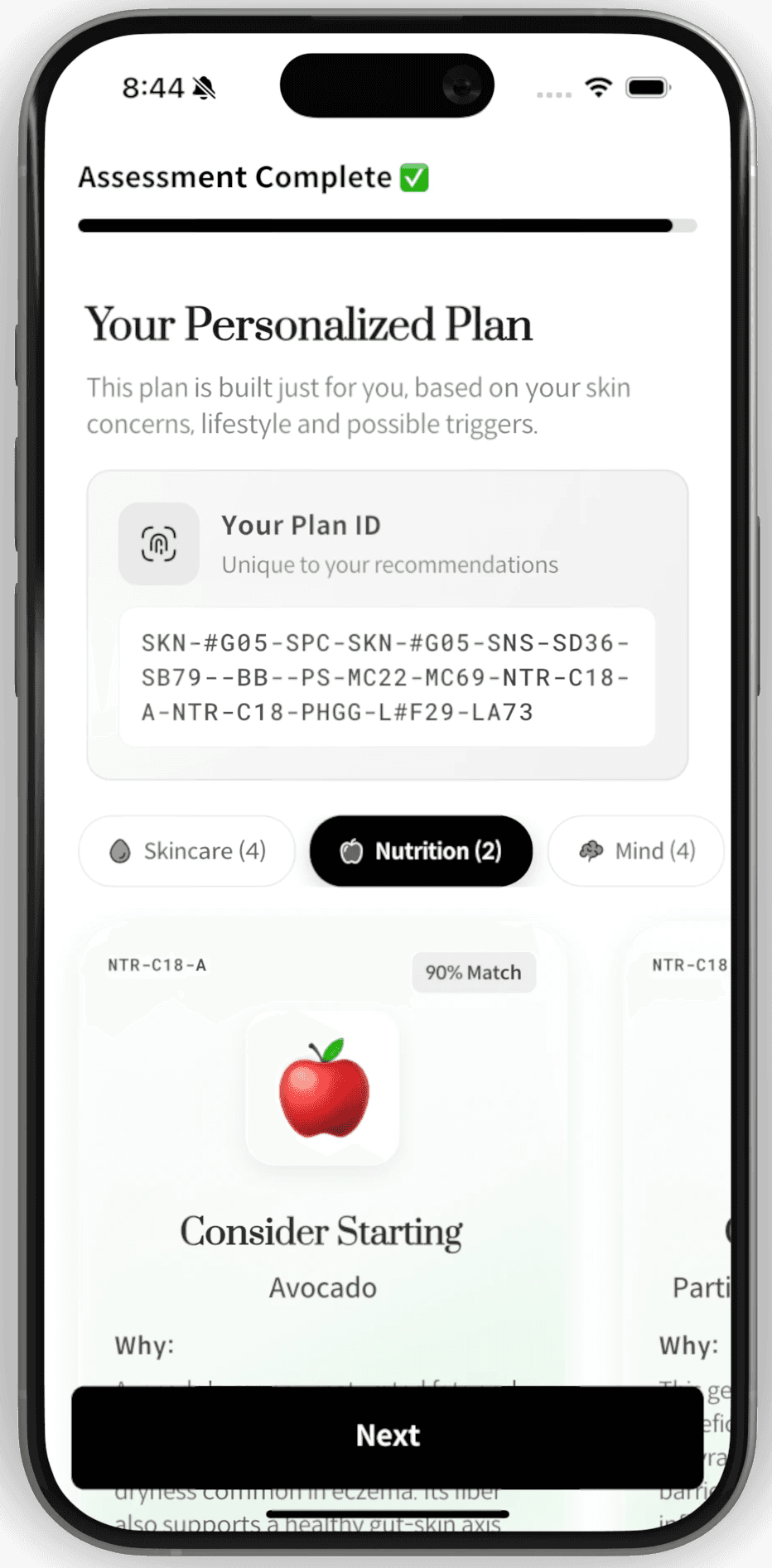
Symphony helps you know if Shrimp is your why.

Symphony helps you know if Shrimp is your why.

Symphony connects the dots between your skin condition and thousands of potential triggers, so you get a personalized plan to achieve lasting change.

Symphony connects the dots between your skin condition and thousands of potential triggers, so you get a personalized plan to achieve lasting change.

Symptom Improvement

Symptom Improvement

Symptom Improvement

>34%

>34%

>34%

Find a trigger within 7 days

Find a trigger within 7 days

Find a trigger within 7 days

92%

92%

92%

Premium UX Template for Framer

This content is for informational purposes only and is not medical advice. Food triggers are highly individual — a food appearing in this database does not mean it will cause your eczema to flare. The information presented is drawn from published clinical research and patient community reports, but it is not a substitute for professional diagnosis or treatment. If you suspect a food allergy or sensitivity, consult a dermatologist or allergist. The gold standard for identifying food triggers remains a supervised elimination diet with oral food challenges. Symphony is a tracking tool, not a diagnostic or medical device.

This content is for informational purposes only and is not medical advice. Food triggers are highly individual — a food appearing in this database does not mean it will cause your eczema to flare. The information presented is drawn from published clinical research and patient community reports, but it is not a substitute for professional diagnosis or treatment. If you suspect a food allergy or sensitivity, consult a dermatologist or allergist. The gold standard for identifying food triggers remains a supervised elimination diet with oral food challenges. Symphony is a tracking tool, not a diagnostic or medical device.

This content is for informational purposes only and is not medical advice. Food triggers are highly individual — a food appearing in this database does not mean it will cause your eczema to flare. The information presented is drawn from published clinical research and patient community reports, but it is not a substitute for professional diagnosis or treatment. If you suspect a food allergy or sensitivity, consult a dermatologist or allergist. The gold standard for identifying food triggers remains a supervised elimination diet with oral food challenges. Symphony is a tracking tool, not a diagnostic or medical device.