Eczema /

Eczema /

Triggers /

Triggers /

Potatoes

Potatoes

Nightshades

Nightshades

Nightshades

Potatoes & Eczema

Contains both allergenic proteins and natural toxins (glycoalkaloids) that damage the gut lining. Peel potatoes to reduce toxins; never eat green or sprouted ones. Sweet potatoes are a safe swap.

🎯 Symphony Trigger Score

🎯 Symphony Trigger Score

2/5

Premium UX Template for Framer

Summary

Summary

Summary

Potatoes contain two types of problem compounds for eczema-prone skin. The first is an allergenic protein called patatin that makes up about 40% of the potato's soluble protein and can trigger immune reactions. The second — and often more relevant — is glycoalkaloids (solanine and chaconine), natural toxins concentrated in the skin that can damage the gut lining and increase permeability, potentially allowing food particles into the bloodstream that drive immune reactions and eczema flares.

Peeling potatoes removes a significant portion of glycoalkaloids. Green-tinged or sprouted potatoes have much higher levels and should be avoided entirely. Sweet potatoes are an unrelated species with a completely different protein profile — they are a safe substitute and are generally well tolerated.

Potatoes contain two types of problem compounds for eczema-prone skin. The first is an allergenic protein called patatin that makes up about 40% of the potato's soluble protein and can trigger immune reactions. The second — and often more relevant — is glycoalkaloids (solanine and chaconine), natural toxins concentrated in the skin that can damage the gut lining and increase permeability, potentially allowing food particles into the bloodstream that drive immune reactions and eczema flares.

Peeling potatoes removes a significant portion of glycoalkaloids. Green-tinged or sprouted potatoes have much higher levels and should be avoided entirely. Sweet potatoes are an unrelated species with a completely different protein profile — they are a safe substitute and are generally well tolerated.

Potatoes contain two types of problem compounds for eczema-prone skin. The first is an allergenic protein called patatin that makes up about 40% of the potato's soluble protein and can trigger immune reactions. The second — and often more relevant — is glycoalkaloids (solanine and chaconine), natural toxins concentrated in the skin that can damage the gut lining and increase permeability, potentially allowing food particles into the bloodstream that drive immune reactions and eczema flares.

Peeling potatoes removes a significant portion of glycoalkaloids. Green-tinged or sprouted potatoes have much higher levels and should be avoided entirely. Sweet potatoes are an unrelated species with a completely different protein profile — they are a safe substitute and are generally well tolerated.

The Details - Potatoes & Eczema

The Details - Potatoes & Eczema

The Details - Potatoes & Eczema

Reaction Timeline

Immediate (minutes to 2 hours), Delayed (12–72 hours)

Immediate (minutes to 2 hours), Delayed (12–72 hours)

IgE-mediated patatin reactions are immediate. Glycoalkaloid-driven gut permeability effects and subsequent eczema flares take longer — typically 12–72 hours — and may be cumulative with daily potato consumption.


Premium UX Template for Framer

How Much Is Needed To React?

Dose-dependent

Dose-dependent

Dose-dependent

A few bites of well-cooked, peeled potato is different from a large serving of unpeeled potatoes. Green-tinged or sprouted potatoes have dramatically higher glycoalkaloid levels and should always be avoided. French fries (deep-fried, often unpeeled) deliver more glycoalkaloids than boiled peeled potatoes.

Does Preparation Matter?

Yes — preparation significantly changes reactivity

Yes — preparation significantly changes reactivity

Yes — preparation significantly changes reactivity

Peeling potatoes removes a significant portion of glycoalkaloids (concentrated in skin). Glycoalkaloids are heat-stable up to ~230°C, so normal cooking does NOT destroy them. Boiling leaches some glycoalkaloids into water (discard the water). Green or sprouted potatoes have dramatically elevated levels — always discard these. Patatin is partially heat-labile, so well-cooked potato may be better tolerated for IgE-mediated allergy. [7][8]

Premium UX Template for Framer

Also Watch Out For...

  1. Latex — patatin cross-reacts with Hev b 7 (latex patatin-like protein) [7]

  2. Tomato — shared Solanaceae family, patatin cross-reactivity

  3. Other nightshades (eggplant, bell pepper) — shared glycoalkaloid pathways

  4. Banana — latex-fruit syndrome overlap

What To Use Instead

  1. Sweet potato (different botanical family — Convolvulaceae, not a nightshade)

  2. Cauliflower mash (as mashed potato substitute)

  3. Turnip or parsnip (for roasting and soups)

  4. Cassava/yuca (for frying and chips)

Premium UX Template for Framer

Hidden Sources

  1. Potato starch (in gluten-free baking, sauces, as thickener)

  2. Modified food starch (may be potato-derived)

  3. Vodka (some brands potato-based — distilled, likely safe)

  4. Gnocchi

  5. Frozen pre-made meals (potato as filler)

  6. Some medications (potato starch as excipient)

  7. Crisps/chips (high glycoalkaloid if made from unpeeled potatoes)

  8. Instant soups and gravies (potato flakes)
Symphony helps you know if Potatoes is your why.

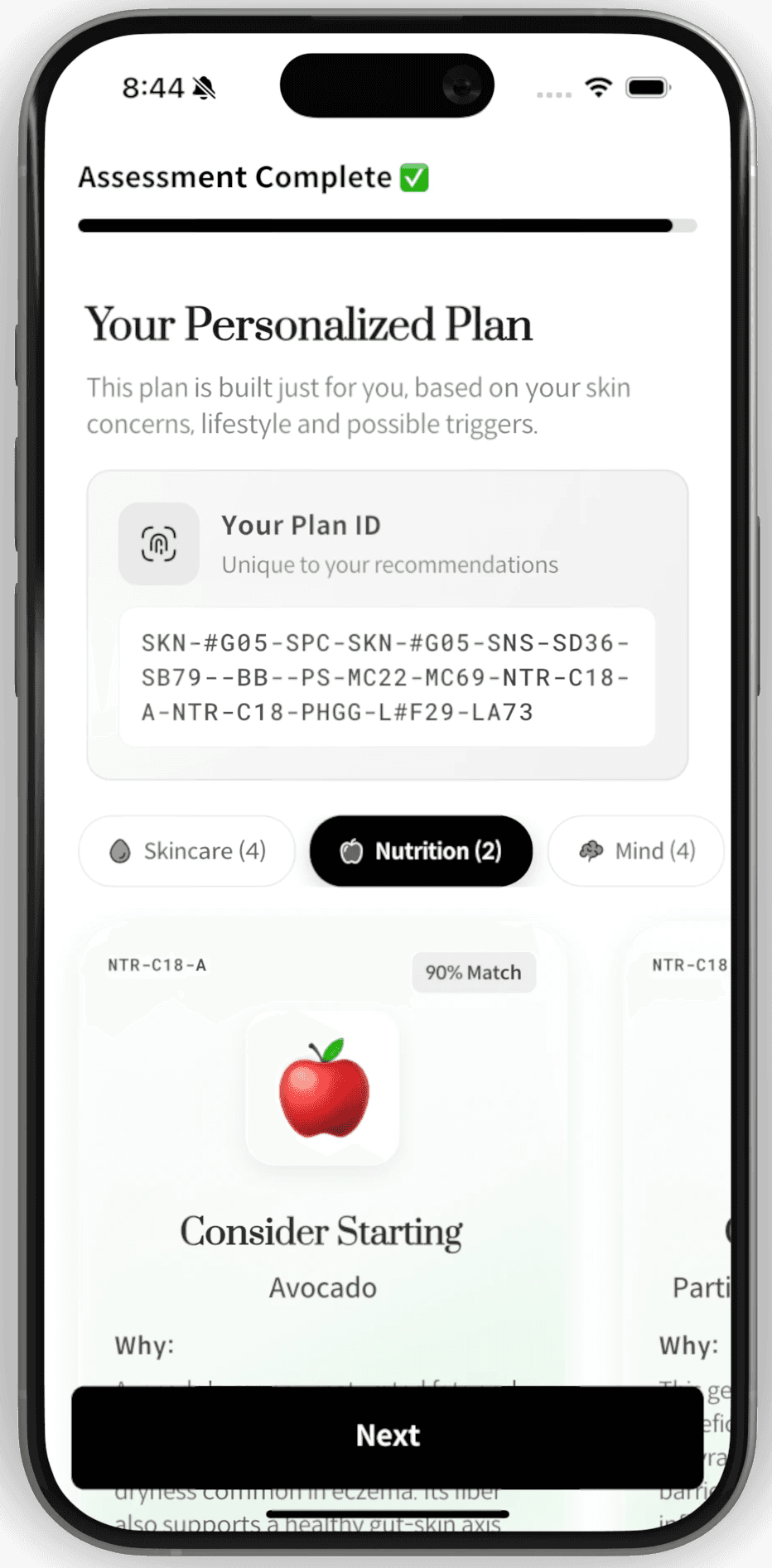
Symphony helps you know if Potatoes is your why.

Symphony connects the dots between your skin condition and thousands of potential triggers, so you get a personalized plan to achieve lasting change.

Symphony connects the dots between your skin condition and thousands of potential triggers, so you get a personalized plan to achieve lasting change.

Symptom Improvement

Symptom Improvement

Symptom Improvement

>34%

>34%

>34%

Find a trigger within 7 days

Find a trigger within 7 days

Find a trigger within 7 days

92%

92%

92%

Premium UX Template for Framer

This content is for informational purposes only and is not medical advice. Food triggers are highly individual — a food appearing in this database does not mean it will cause your eczema to flare. The information presented is drawn from published clinical research and patient community reports, but it is not a substitute for professional diagnosis or treatment. If you suspect a food allergy or sensitivity, consult a dermatologist or allergist. The gold standard for identifying food triggers remains a supervised elimination diet with oral food challenges. Symphony is a tracking tool, not a diagnostic or medical device.

This content is for informational purposes only and is not medical advice. Food triggers are highly individual — a food appearing in this database does not mean it will cause your eczema to flare. The information presented is drawn from published clinical research and patient community reports, but it is not a substitute for professional diagnosis or treatment. If you suspect a food allergy or sensitivity, consult a dermatologist or allergist. The gold standard for identifying food triggers remains a supervised elimination diet with oral food challenges. Symphony is a tracking tool, not a diagnostic or medical device.

This content is for informational purposes only and is not medical advice. Food triggers are highly individual — a food appearing in this database does not mean it will cause your eczema to flare. The information presented is drawn from published clinical research and patient community reports, but it is not a substitute for professional diagnosis or treatment. If you suspect a food allergy or sensitivity, consult a dermatologist or allergist. The gold standard for identifying food triggers remains a supervised elimination diet with oral food challenges. Symphony is a tracking tool, not a diagnostic or medical device.