Eczema /

Eczema /

Triggers /

Triggers /

Hazelnuts

Hazelnuts

Nuts & Seeds

Nuts & Seeds

Nuts & Seeds

Hazelnuts & Eczema

Most common tree nut allergy in Europe. Birch-pollen type tolerates roasted forms and products like Nutella; heat-stable type reacts to all forms. Found in chocolate, pralines, and cosmetics.

🎯 Symphony Trigger Score

🎯 Symphony Trigger Score

4/5

Premium UX Template for Framer

Summary

Summary

Summary

Hazelnut allergy comes in two very different forms that require completely different management. The most common form in Northern Europe is birch pollen cross-reactivity — the immune system confuses a hazelnut protein with birch pollen, causing mild mouth itching and tingling. Over 97% of people with this protein are also birch-pollen-allergic. Because this protein is destroyed by heat, these people can typically eat roasted hazelnuts and products like Nutella without problems.

The second, less common but more dangerous form involves heat-stable storage proteins that survive all cooking. This form causes systemic reactions and anaphylaxis and requires strict avoidance of all hazelnut products in any form. A component allergy test (Cor a 1 vs. Cor a 9/14) can distinguish between the two.

Hazelnut allergy comes in two very different forms that require completely different management. The most common form in Northern Europe is birch pollen cross-reactivity — the immune system confuses a hazelnut protein with birch pollen, causing mild mouth itching and tingling. Over 97% of people with this protein are also birch-pollen-allergic. Because this protein is destroyed by heat, these people can typically eat roasted hazelnuts and products like Nutella without problems.

The second, less common but more dangerous form involves heat-stable storage proteins that survive all cooking. This form causes systemic reactions and anaphylaxis and requires strict avoidance of all hazelnut products in any form. A component allergy test (Cor a 1 vs. Cor a 9/14) can distinguish between the two.

Hazelnut allergy comes in two very different forms that require completely different management. The most common form in Northern Europe is birch pollen cross-reactivity — the immune system confuses a hazelnut protein with birch pollen, causing mild mouth itching and tingling. Over 97% of people with this protein are also birch-pollen-allergic. Because this protein is destroyed by heat, these people can typically eat roasted hazelnuts and products like Nutella without problems.

The second, less common but more dangerous form involves heat-stable storage proteins that survive all cooking. This form causes systemic reactions and anaphylaxis and requires strict avoidance of all hazelnut products in any form. A component allergy test (Cor a 1 vs. Cor a 9/14) can distinguish between the two.

The Details - Hazelnuts & Eczema

The Details - Hazelnuts & Eczema

The Details - Hazelnuts & Eczema

Reaction Timeline

Immediate (minutes to 2 hours)

Immediate (minutes to 2 hours)

Both pathways cause immediate reactions. Birch-cross-reactive OAS is milder and localized to the mouth. Storage-protein-driven reactions can be systemic and severe.


Premium UX Template for Framer

How Much Is Needed To React?

Any amount

Any amount

Any amount

Storage-protein-sensitized individuals (Cor a 9/14) can react to trace amounts. Birch-cross-reactive individuals (Cor a 1) often tolerate small amounts of roasted hazelnut but react to raw. Testing must distinguish the pathway first.

Does Preparation Matter?

Yes — preparation significantly changes reactivity

Yes — preparation significantly changes reactivity

Yes — preparation significantly changes reactivity

For birch-cross-reactive patients (Cor a 1): roasting destroys the heat-labile Cor a 1, so roasted hazelnuts and hazelnut spread (like Nutella) may be tolerated. For storage-protein patients (Cor a 9/14): these allergens are heat-stable, so roasting, baking, and all processing does NOT help. Knowing which pathway applies is critical before testing. [33]

Premium UX Template for Framer

Also Watch Out For...

  1. Birch pollen — >97% cross-reactivity with Cor a 1 [33]

  2. Other tree nuts — shared storage protein families (especially walnut, cashew via 2S albumin)

  3. Peanut — co-sensitization common (not always true cross-reactivity)

  4. Apple, cherry, peach — birch-pollen-related cross-reactivity (Bet v 1 homologs in Rosaceae fruits)

What To Use Instead

  1. Sunflower seed butter (for Nutella alternative on toast)

  2. Tahini with cocoa (homemade chocolate spread — note: sesame on trigger list)

  3. Coconut flakes (for baking — note: coconut on trigger list)

  4. Pumpkin seed butter

Premium UX Template for Framer

Hidden Sources

  1. Nutella and other chocolate-hazelnut spreads

  2. Praline chocolates

  3. Gianduja (hazelnut chocolate)

  4. Frangelico liqueur

  5. Hazelnut coffee flavorings (syrups)

  6. Hazelnut flour in gluten-free baking

  7. Granola and muesli

  8. Some protein bars

  9. Cosmetics with hazelnut oil

  10. Ferrero Rocher and similar confections
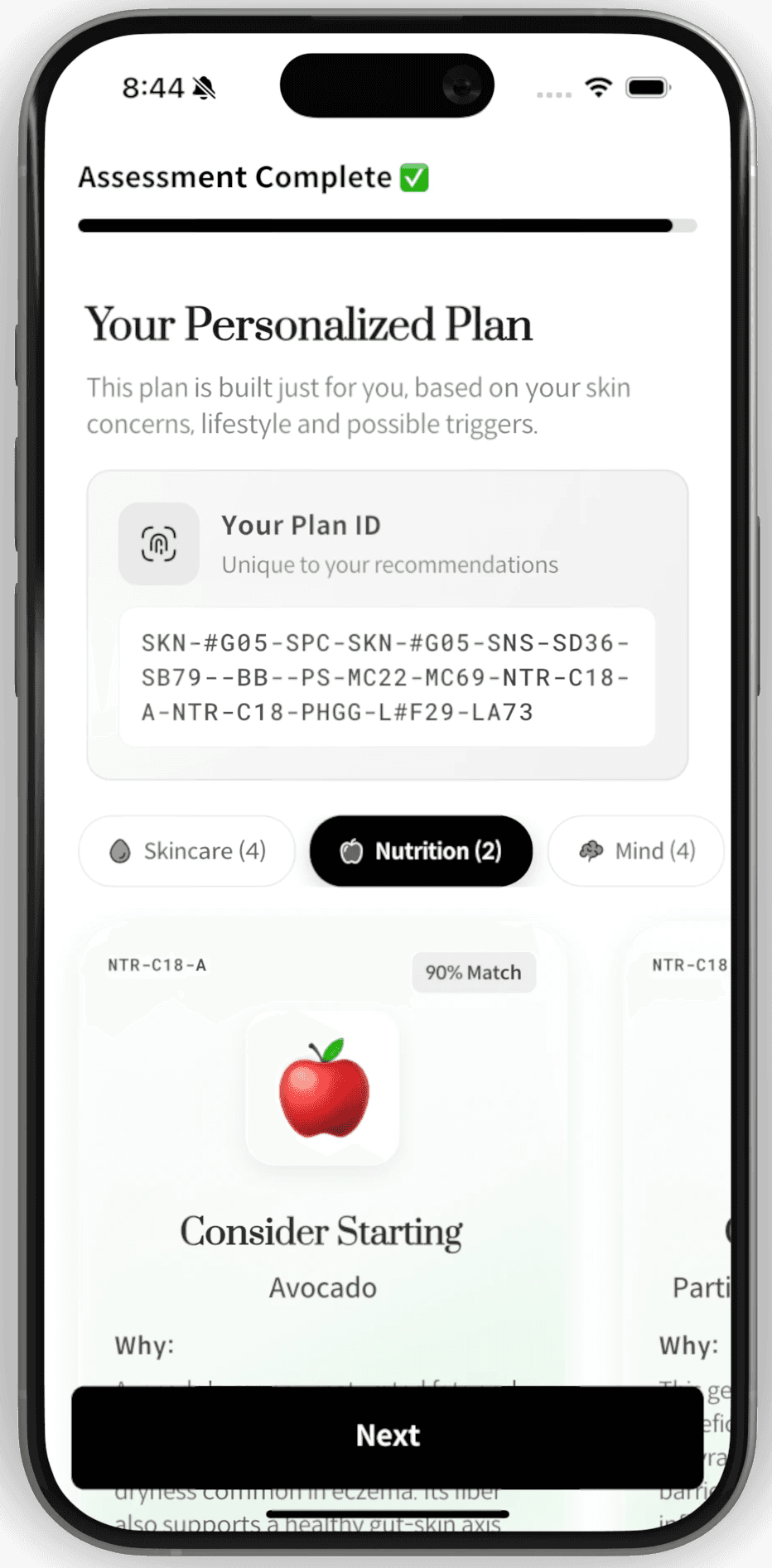
Symphony helps you know if Hazelnuts is your why.

Symphony helps you know if Hazelnuts is your why.

Symphony connects the dots between your skin condition and thousands of potential triggers, so you get a personalized plan to achieve lasting change.

Symphony connects the dots between your skin condition and thousands of potential triggers, so you get a personalized plan to achieve lasting change.

Symptom Improvement

Symptom Improvement

Symptom Improvement

>34%

>34%

>34%

Find a trigger within 7 days

Find a trigger within 7 days

Find a trigger within 7 days

92%

92%

92%

Premium UX Template for Framer

This content is for informational purposes only and is not medical advice. Food triggers are highly individual — a food appearing in this database does not mean it will cause your eczema to flare. The information presented is drawn from published clinical research and patient community reports, but it is not a substitute for professional diagnosis or treatment. If you suspect a food allergy or sensitivity, consult a dermatologist or allergist. The gold standard for identifying food triggers remains a supervised elimination diet with oral food challenges. Symphony is a tracking tool, not a diagnostic or medical device.

This content is for informational purposes only and is not medical advice. Food triggers are highly individual — a food appearing in this database does not mean it will cause your eczema to flare. The information presented is drawn from published clinical research and patient community reports, but it is not a substitute for professional diagnosis or treatment. If you suspect a food allergy or sensitivity, consult a dermatologist or allergist. The gold standard for identifying food triggers remains a supervised elimination diet with oral food challenges. Symphony is a tracking tool, not a diagnostic or medical device.

This content is for informational purposes only and is not medical advice. Food triggers are highly individual — a food appearing in this database does not mean it will cause your eczema to flare. The information presented is drawn from published clinical research and patient community reports, but it is not a substitute for professional diagnosis or treatment. If you suspect a food allergy or sensitivity, consult a dermatologist or allergist. The gold standard for identifying food triggers remains a supervised elimination diet with oral food challenges. Symphony is a tracking tool, not a diagnostic or medical device.