Eczema /

Eczema /

Triggers /

Triggers /

Cheese (hard/aged)

Cheese (hard/aged)

Dairy

Hard & Aged Cheese & Eczema

Aged cheeses like Parmesan and Gorgonzola combine dairy proteins with very high histamine from the ageing process. A significant trigger for those with dairy sensitivity, histamine intolerance, or both.

🎯 Symphony Trigger Score

🎯 Symphony Trigger Score

4/5
Premium UX Template for Framer

Summary

Summary

Aged cheeses like Parmesan, Gorgonzola, and Swiss present two separate problems for eczema-prone skin. First, they contain concentrated milk proteins that can trigger immune reactions in people sensitive to dairy. Second — and this is what makes aged cheese worse than fresh dairy — bacteria used in the ageing process produce large amounts of histamine, the same chemical the body releases during allergic reactions. Histamine makes blood vessels leaky, skin red and itchy, and worsens eczema inflammation. Gorgonzola can contain up to 730 mg/kg of histamine, which is extremely high.

The body has an enzyme called DAO that breaks down histamine, but around one third of people with eczema have reduced levels of this enzyme — meaning the histamine from aged cheese can overwhelm the system. The longer a cheese has been aged, the more histamine it contains and the more likely it is to cause problems.

Aged cheeses like Parmesan, Gorgonzola, and Swiss present two separate problems for eczema-prone skin. First, they contain concentrated milk proteins that can trigger immune reactions in people sensitive to dairy. Second — and this is what makes aged cheese worse than fresh dairy — bacteria used in the ageing process produce large amounts of histamine, the same chemical the body releases during allergic reactions. Histamine makes blood vessels leaky, skin red and itchy, and worsens eczema inflammation. Gorgonzola can contain up to 730 mg/kg of histamine, which is extremely high.

The body has an enzyme called DAO that breaks down histamine, but around one third of people with eczema have reduced levels of this enzyme — meaning the histamine from aged cheese can overwhelm the system. The longer a cheese has been aged, the more histamine it contains and the more likely it is to cause problems.

The Details - Hard & Aged Cheese & Eczema

The Details - Hard & Aged Cheese & Eczema

Reaction Timeline

Immediate (minutes to 2 hours), Short delay (2–12 hours)

Immediate (minutes to 2 hours), Short delay (2–12 hours)

Casein IgE reactions occur within minutes. Histamine-driven symptoms (flushing, itching, eczema worsening) typically appear within 30 min to a few hours and are dose-dependent.


Premium UX Template for Framer

How Much Is Needed To React?

Dose-dependent

Histamine reactions depend on the total load consumed and your body's ability to break it down (DAO enzyme). A small shaving of Parmesan on pasta is very different from a large cheese board. Start with small amounts and increase to find your personal threshold.

Does Preparation Matter?

Minimal difference

Neither casein nor histamine is destroyed by cooking. Aging increases both casein concentration and histamine levels. There is no way to prepare aged cheese to reduce its trigger potential. The only variable is amount consumed. [8]

Premium UX Template for Framer

Also Watch Out For...

  1. Goat and sheep aged cheeses — same casein cross-reactivity (>90%) AND same histamine issue; NOT safer

  2. Cow's milk — shares casein allergens

  3. Other high-histamine foods — cumulative histamine load from wine, salami, etc. compounds the effect

What To Use Instead

  1. Fresh mozzarella (much lower histamine, still contains casein — test if casein-tolerant)

  2. Nutritional yeast for a cheesy flavor (note: yeast is itself a trigger for some people, see #69)

  3. Cashew-based aged cheese alternatives (note: cashews are on the trigger list)

Premium UX Template for Framer

Hidden Sources

  1. Parmesan shavings in salads and pastas

  2. Cheese powder in snack chips (Doritos, Cheetos)

  3. Gratin or au gratin toppings on restaurant dishes

  4. Cheese-flavored crackers

  5. Pesto (often contains Parmesan)

  6. Caesar dressing (Parmesan)

  7. Pre-made pizza sauces with aged cheese
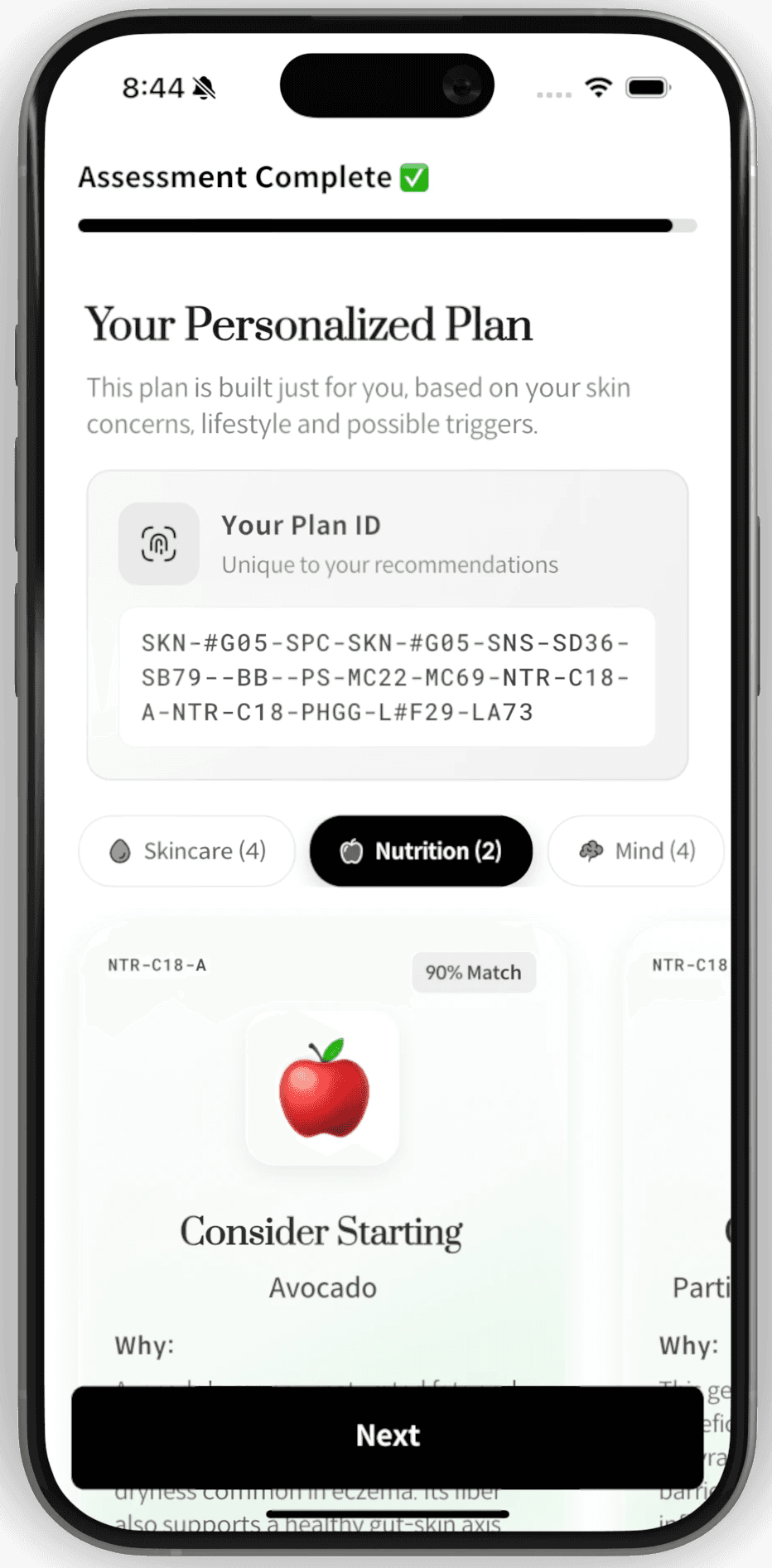
Symphony helps you know if Cheese (hard/aged) is your why.

Symphony helps you know if Cheese (hard/aged) is your why.

Symphony connects the dots between your skin condition and thousands of potential triggers, so you get a personalized plan to achieve lasting change.

Symphony connects the dots between your skin condition and thousands of potential triggers, so you get a personalized plan to achieve lasting change.

Symptom Improvement

Symptom Improvement

Symptom Improvement

>34%

>34%

>34%

Find a trigger within 7 days

Find a trigger within 7 days

Find a trigger within 7 days

92%

92%

92%

Premium UX Template for Framer

This content is for informational purposes only and is not medical advice. Food triggers are highly individual — a food appearing in this database does not mean it will cause your eczema to flare. The information presented is drawn from published clinical research and patient community reports, but it is not a substitute for professional diagnosis or treatment. If you suspect a food allergy or sensitivity, consult a dermatologist or allergist. The gold standard for identifying food triggers remains a supervised elimination diet with oral food challenges. Symphony is a tracking tool, not a diagnostic or medical device.

This content is for informational purposes only and is not medical advice. Food triggers are highly individual — a food appearing in this database does not mean it will cause your eczema to flare. The information presented is drawn from published clinical research and patient community reports, but it is not a substitute for professional diagnosis or treatment. If you suspect a food allergy or sensitivity, consult a dermatologist or allergist. The gold standard for identifying food triggers remains a supervised elimination diet with oral food challenges. Symphony is a tracking tool, not a diagnostic or medical device.