Eczema /

Eczema /

Triggers /

Triggers /

Cow's milk

Cow's milk

Dairy

Dairy

Dairy

Cow's milk & Eczema

The most common food trigger for eczema in infants. Found in milk, cheese, yogurt, cream, and hidden in baked goods, sauces, and 'non-dairy' products. A priority food to investigate in moderate-to-severe eczema.

🎯 Symphony Trigger Score

🎯 Symphony Trigger Score

5/5

Premium UX Template for Framer

Summary

Summary

Summary

Cow's milk is the most common food trigger for eczema in infants and young children. It contains proteins (casein and whey) that the immune system can mistakenly identify as harmful — and when this happens, the body launches an inflammatory response that shows up as red, itchy, inflamed skin.

Reactions can appear within minutes as hives or swelling, but many people experience a delayed flare where skin worsens 1–3 days after consuming milk — which makes it genuinely difficult to connect cause and effect without a food diary. About 2–3% of infants have a confirmed milk allergy, and roughly half of those also have eczema. Heating milk thoroughly (such as baking it into a muffin) destroys some of the problem proteins, which is why about 75% of milk-allergic children can eat baked goods containing milk even when they cannot tolerate a glass of it.

Cow's milk is the most common food trigger for eczema in infants and young children. It contains proteins (casein and whey) that the immune system can mistakenly identify as harmful — and when this happens, the body launches an inflammatory response that shows up as red, itchy, inflamed skin.

Reactions can appear within minutes as hives or swelling, but many people experience a delayed flare where skin worsens 1–3 days after consuming milk — which makes it genuinely difficult to connect cause and effect without a food diary. About 2–3% of infants have a confirmed milk allergy, and roughly half of those also have eczema. Heating milk thoroughly (such as baking it into a muffin) destroys some of the problem proteins, which is why about 75% of milk-allergic children can eat baked goods containing milk even when they cannot tolerate a glass of it.

Cow's milk is the most common food trigger for eczema in infants and young children. It contains proteins (casein and whey) that the immune system can mistakenly identify as harmful — and when this happens, the body launches an inflammatory response that shows up as red, itchy, inflamed skin.

Reactions can appear within minutes as hives or swelling, but many people experience a delayed flare where skin worsens 1–3 days after consuming milk — which makes it genuinely difficult to connect cause and effect without a food diary. About 2–3% of infants have a confirmed milk allergy, and roughly half of those also have eczema. Heating milk thoroughly (such as baking it into a muffin) destroys some of the problem proteins, which is why about 75% of milk-allergic children can eat baked goods containing milk even when they cannot tolerate a glass of it.

The Details - Cow's milk & Eczema

The Details - Cow's milk & Eczema

The Details - Cow's milk & Eczema

Reaction Timeline

Immediate (minutes to 2 hours), Delayed (12–72 hours)

Immediate (minutes to 2 hours), Delayed (12–72 hours)

IgE-mediated reactions (hives, swelling) happen within minutes. Eczema flares from non-IgE pathways average ~54 hours after ingestion, making it hard to link cause and effect without a structured diary. [4]


Premium UX Template for Framer

How Much Is Needed To React?

Any amount

Any amount

Any amount

Highly sensitised individuals can react to trace amounts of casein. However, many people with milder sensitivity tolerate a splash of milk in coffee but flare from a bowl of cereal. Testing should start with baked milk in a wheat matrix (e.g., a muffin) before trying liquid milk. [5]

Does Preparation Matter?

Yes — preparation significantly changes reactivity

Yes — preparation significantly changes reactivity

Yes — preparation significantly changes reactivity

75% of children with cow's milk allergy tolerate baked milk (350°F for 30 min in a wheat matrix like a muffin). Heating denatures whey proteins but NOT casein. Ghee (clarified butter) removes nearly all protein and is tolerated by most mildly sensitive individuals. Avoid raw/unheated dairy first. [5][6]

Premium UX Template for Framer

Also Watch Out For...

  1. Goat's milk and sheep's milk — >90% cross-reactivity due to casein homology; NOT a safe substitute

  2. Beef — ~10% of CMA children react via shared bovine serum albumin (Bos d 6)

  3. Cat dander — BSA cross-reacts with cat allergen Fel d 2

  4. Dog dander — BSA cross-reacts with Can f 3

  5. Horse dander — BSA cross-reacts with Equ c 3

What To Use Instead

  1. Oat milk (in coffee, cereal, baking) — note: oats are also a reported trigger for some people

  2. Coconut cream (in sauces, curries, desserts)

  3. Rice milk (mild flavor for cereals)

  4. Ghee as a butter substitute if mildly sensitive (test carefully)

Premium UX Template for Framer

Hidden Sources

  1. "Non-dairy" coffee creamers (often contain sodium caseinate)

  2. Whey protein in protein bars and shakes

  3. Store-bought bread (milk powder listed as ingredient)

  4. Processed deli meats (caseinates as binder)

  5. Prescription medications (lactose filler in ~20% of drugs)

  6. Margarine (may contain buttermilk or whey)

  7. Instant mashed potatoes (milk powder)

  8. Dark chocolate (may contain milk traces)

  9. Shampoos and lotions with milk proteins

  10. Seasoning mixes (e.g., ranch, BBQ rubs)

  11. Wine (casein used as fining agent)

  12. Artificial butter flavoring in popcorn
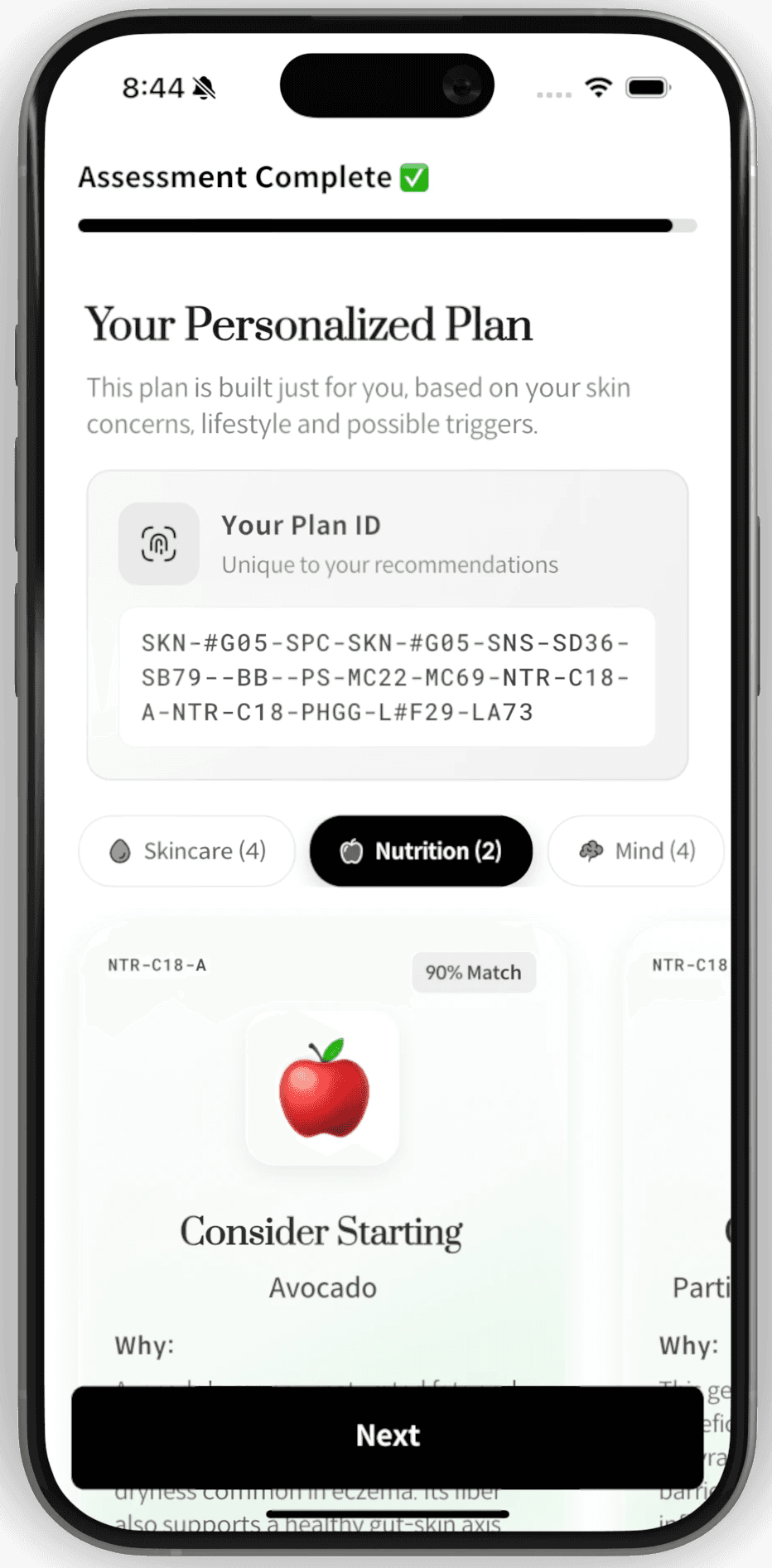
Symphony helps you know if Cow's milk is your why.

Symphony helps you know if Cow's milk is your why.

Symphony connects the dots between your skin condition and thousands of potential triggers, so you get a personalized plan to achieve lasting change.

Symphony connects the dots between your skin condition and thousands of potential triggers, so you get a personalized plan to achieve lasting change.

Symptom Improvement

Symptom Improvement

Symptom Improvement

>34%

>34%

>34%

Find a trigger within 7 days

Find a trigger within 7 days

Find a trigger within 7 days

92%

92%

92%

Premium UX Template for Framer

This content is for informational purposes only and is not medical advice. Food triggers are highly individual — a food appearing in this database does not mean it will cause your eczema to flare. The information presented is drawn from published clinical research and patient community reports, but it is not a substitute for professional diagnosis or treatment. If you suspect a food allergy or sensitivity, consult a dermatologist or allergist. The gold standard for identifying food triggers remains a supervised elimination diet with oral food challenges. Symphony is a tracking tool, not a diagnostic or medical device.

This content is for informational purposes only and is not medical advice. Food triggers are highly individual — a food appearing in this database does not mean it will cause your eczema to flare. The information presented is drawn from published clinical research and patient community reports, but it is not a substitute for professional diagnosis or treatment. If you suspect a food allergy or sensitivity, consult a dermatologist or allergist. The gold standard for identifying food triggers remains a supervised elimination diet with oral food challenges. Symphony is a tracking tool, not a diagnostic or medical device.

This content is for informational purposes only and is not medical advice. Food triggers are highly individual — a food appearing in this database does not mean it will cause your eczema to flare. The information presented is drawn from published clinical research and patient community reports, but it is not a substitute for professional diagnosis or treatment. If you suspect a food allergy or sensitivity, consult a dermatologist or allergist. The gold standard for identifying food triggers remains a supervised elimination diet with oral food challenges. Symphony is a tracking tool, not a diagnostic or medical device.