Eczema /

Eczema /

Triggers /

Triggers /

Coconut

Coconut

Other

Other

Other

Coconut & Eczema

Food allergy is rare despite FDA tree nut classification. The real risk is coconut-derived surfactants in shampoos and body washes (CAPB). Paradoxically, virgin coconut oil applied to skin can help eczema.

🎯 Symphony Trigger Score

🎯 Symphony Trigger Score

1/5

Premium UX Template for Framer

Summary

Summary

Summary

Coconut has a different risk profile depending on whether it is being eaten or applied to the skin. As a food allergen, true coconut allergy is rare — despite being classified as a tree nut by the US FDA, coconut is botanically a drupe (stone fruit), and people with peanut or tree nut allergies are not more likely to be allergic to coconut.

However, coconut-derived surfactants used in shampoos, body washes, and facial cleansers — particularly cocamidopropyl betaine (CAPB) — are a well-documented cause of contact dermatitis, significant enough that CAPB was named Allergen of the Year in 2004. This means the coconut products applied to the body rather than the coconut consumed as food are the more relevant concern for most people with eczema. Virgin coconut oil applied to eczema skin has shown anti-inflammatory benefits in clinical studies and is generally well tolerated.

Coconut has a different risk profile depending on whether it is being eaten or applied to the skin. As a food allergen, true coconut allergy is rare — despite being classified as a tree nut by the US FDA, coconut is botanically a drupe (stone fruit), and people with peanut or tree nut allergies are not more likely to be allergic to coconut.

However, coconut-derived surfactants used in shampoos, body washes, and facial cleansers — particularly cocamidopropyl betaine (CAPB) — are a well-documented cause of contact dermatitis, significant enough that CAPB was named Allergen of the Year in 2004. This means the coconut products applied to the body rather than the coconut consumed as food are the more relevant concern for most people with eczema. Virgin coconut oil applied to eczema skin has shown anti-inflammatory benefits in clinical studies and is generally well tolerated.

Coconut has a different risk profile depending on whether it is being eaten or applied to the skin. As a food allergen, true coconut allergy is rare — despite being classified as a tree nut by the US FDA, coconut is botanically a drupe (stone fruit), and people with peanut or tree nut allergies are not more likely to be allergic to coconut.

However, coconut-derived surfactants used in shampoos, body washes, and facial cleansers — particularly cocamidopropyl betaine (CAPB) — are a well-documented cause of contact dermatitis, significant enough that CAPB was named Allergen of the Year in 2004. This means the coconut products applied to the body rather than the coconut consumed as food are the more relevant concern for most people with eczema. Virgin coconut oil applied to eczema skin has shown anti-inflammatory benefits in clinical studies and is generally well tolerated.

The Details - Coconut & Eczema

The Details - Coconut & Eczema

The Details - Coconut & Eczema

Reaction Timeline

Immediate (minutes to 2 hours), Delayed (12–72 hours)

Immediate (minutes to 2 hours), Delayed (12–72 hours)

IgE-mediated dietary reactions (rare) are immediate. CAPB contact dermatitis is delayed 24–72 hours. If your eczema worsens with coconut-containing shampoos or soaps but NOT with eating coconut, CAPB contact allergy is the likely mechanism.


Premium UX Template for Framer

How Much Is Needed To React?

Dose-dependent

Dose-dependent

Dose-dependent

A small amount of coconut in cooking is minimal exposure. The CAPB in personal care products is often a larger and more persistent exposure than dietary coconut. If you suspect coconut, distinguish between dietary and topical exposure routes.

Does Preparation Matter?

Yes — preparation significantly changes reactivity

Yes — preparation significantly changes reactivity

Yes — preparation significantly changes reactivity

Refined coconut oil has very low protein content and is typically tolerated even by coconut-allergic individuals. Virgin/cold-pressed coconut oil retains more protein. Coconut milk and cream have higher protein than oil. CAPB (surfactant) is a chemically modified derivative — allergy to CAPB does not necessarily mean allergy to coconut food. [8]


Premium UX Template for Framer

Also Watch Out For...

  1. Tree nuts — cross-reactivity via legumin-like proteins (especially macadamia, r=0.81) [8]

  2. Lentil/soy — 7S/11S globulin cross-reactivity

  3. Buckwheat — 7S vicilin cross-reactivity

  4. Latex — some cross-reactivity documented

  5. NOT immunologically equivalent to tree nuts despite FDA classification

What To Use Instead

  1. MCT oil (medium-chain triglycerides derived from coconut but protein-free)

  2. Olive oil (for cooking)

  3. Avocado oil (for high-heat cooking — note: avocado on trigger list)

  4. Oat milk (for coconut milk substitute — note: oats on trigger list)

Premium UX Template for Framer

Hidden Sources

  1. Coconut oil in cooking and skincare

  2. Coconut milk in curries and smoothies

  3. Coconut cream in desserts

  4. Desiccated coconut in baking

  5. Cocamidopropyl betaine in shampoos, soaps, cleansers

  6. Coconut-derived emulsifiers in cosmetics

  7. Coconut aminos (soy sauce substitute)

  8. Many "natural" and "gentle" skincare products contain coconut derivatives

  9. Coconut flour in gluten-free baking

  10. Coconut water

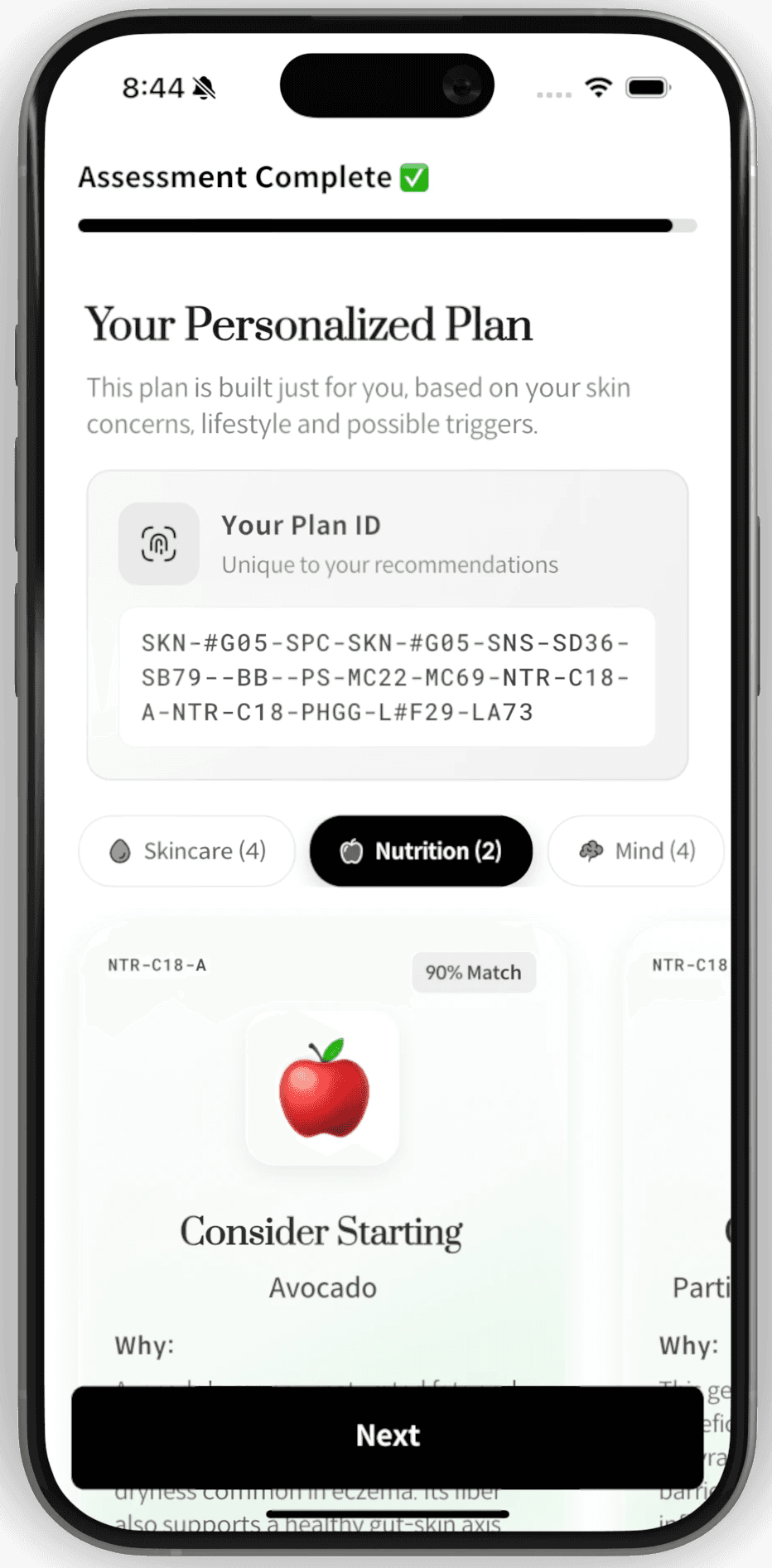
Symphony helps you know if Coconut is your why.

Symphony helps you know if Coconut is your why.

Symphony connects the dots between your skin condition and thousands of potential triggers, so you get a personalized plan to achieve lasting change.

Symphony connects the dots between your skin condition and thousands of potential triggers, so you get a personalized plan to achieve lasting change.

Symptom Improvement

Symptom Improvement

Symptom Improvement

>34%

>34%

>34%

Find a trigger within 7 days

Find a trigger within 7 days

Find a trigger within 7 days

92%

92%

92%

Premium UX Template for Framer

This content is for informational purposes only and is not medical advice. Food triggers are highly individual — a food appearing in this database does not mean it will cause your eczema to flare. The information presented is drawn from published clinical research and patient community reports, but it is not a substitute for professional diagnosis or treatment. If you suspect a food allergy or sensitivity, consult a dermatologist or allergist. The gold standard for identifying food triggers remains a supervised elimination diet with oral food challenges. Symphony is a tracking tool, not a diagnostic or medical device.

This content is for informational purposes only and is not medical advice. Food triggers are highly individual — a food appearing in this database does not mean it will cause your eczema to flare. The information presented is drawn from published clinical research and patient community reports, but it is not a substitute for professional diagnosis or treatment. If you suspect a food allergy or sensitivity, consult a dermatologist or allergist. The gold standard for identifying food triggers remains a supervised elimination diet with oral food challenges. Symphony is a tracking tool, not a diagnostic or medical device.

This content is for informational purposes only and is not medical advice. Food triggers are highly individual — a food appearing in this database does not mean it will cause your eczema to flare. The information presented is drawn from published clinical research and patient community reports, but it is not a substitute for professional diagnosis or treatment. If you suspect a food allergy or sensitivity, consult a dermatologist or allergist. The gold standard for identifying food triggers remains a supervised elimination diet with oral food challenges. Symphony is a tracking tool, not a diagnostic or medical device.