Eczema /

Eczema /

Triggers /

Triggers /

Chocolate

Chocolate

Chocolate & Coffee

Chocolate & Eczema

Multiple possible triggers: dairy (milk chocolate), histamine, nickel (dark chocolate), or soy lecithin. Comparing dark versus milk chocolate can help identify the actual trigger. A nickel patch test can also help.

🎯 Symphony Trigger Score

🎯 Symphony Trigger Score

3/5
Premium UX Template for Framer

Summary

Summary

Chocolate triggers eczema through several mechanisms, and identifying which one applies requires some detective work. Cocoa itself contains histamine, the stimulant theobromine, and notably high levels of nickel — a metal that causes skin reactions when eaten in sufficient quantities in people who are nickel-sensitive (systemic contact dermatitis).

However, many reactions to chocolate are actually caused by other ingredients: milk chocolate contains dairy proteins, many bars contain soy lecithin, and nuts are common additions. In one study, 35% of children with eczema flared after chocolate consumption. Comparing reactions to dark versus milk chocolate is a useful first step — if only milk chocolate causes a reaction, dairy is the trigger; if dark chocolate also causes a reaction, cocoa, nickel, or soy is more likely.

Chocolate triggers eczema through several mechanisms, and identifying which one applies requires some detective work. Cocoa itself contains histamine, the stimulant theobromine, and notably high levels of nickel — a metal that causes skin reactions when eaten in sufficient quantities in people who are nickel-sensitive (systemic contact dermatitis).

However, many reactions to chocolate are actually caused by other ingredients: milk chocolate contains dairy proteins, many bars contain soy lecithin, and nuts are common additions. In one study, 35% of children with eczema flared after chocolate consumption. Comparing reactions to dark versus milk chocolate is a useful first step — if only milk chocolate causes a reaction, dairy is the trigger; if dark chocolate also causes a reaction, cocoa, nickel, or soy is more likely.

The Details - Chocolate & Eczema

The Details - Chocolate & Eczema

Reaction Timeline

Short delay (2–12 hours), Cumulative (days of repeated exposure)

Short delay (2–12 hours), Cumulative (days of repeated exposure)

Histamine/biogenic amine effects within hours. Nickel-driven systemic contact dermatitis is delayed (24–72 hours). Cumulative daily chocolate consumption can maintain a baseline inflammatory state.


Premium UX Template for Framer

How Much Is Needed To React?

Dose-dependent

A small piece of dark chocolate is different from a large milk chocolate bar (which adds dairy allergens). Dark chocolate has more cocoa (more histamine, nickel, theobromine) but no milk. Milk chocolate has less cocoa but adds dairy. This creates different risk profiles.

Does Preparation Matter?

Minimal difference

Histamine and nickel content are not affected by cooking or baking. Raw cacao has similar allergenic potential to processed cocoa. White chocolate contains cocoa butter (fat) with minimal cocoa solids and may be better tolerated if the issue is histamine/theobromine from cocoa solids. [13]


Premium UX Template for Framer

Also Watch Out For...

  1. Cow's milk — most milk chocolate contains dairy

  2. Soy — soy lecithin is a standard chocolate emulsifier

  3. Tree nuts — frequently co-present in chocolate products

  4. Nickel — cocoa is one of the highest dietary nickel sources; cross-reacts with nickel in jewelry/metals for contact-sensitized individuals [14]

What To Use Instead

  1. Carob powder (for a chocolate-like flavor without cocoa — naturally caffeine-free)

  2. White chocolate (if cocoa solids are the issue — still contains cocoa butter and usually milk)

  3. Carob chips (for baking)

  4. Tiger nut "chocolate" milk (nut-free, dairy-free)

Premium UX Template for Framer

Hidden Sources

  1. Cocoa powder in baked goods and drinks

  2. Chocolate chips in cookies and trail mix

  3. Hot cocoa and mocha coffee drinks

  4. Chocolate protein powders and bars

  5. Mole sauce (Mexican — contains cocoa)

  6. Chocolate-flavored medications

  7. Cocoa butter in cosmetics and lip balm

  8. Nutella (chocolate + hazelnut + milk)

  9. Chocolate-coated nuts and fruits

  10. Some stout and porter beers (chocolate malt)
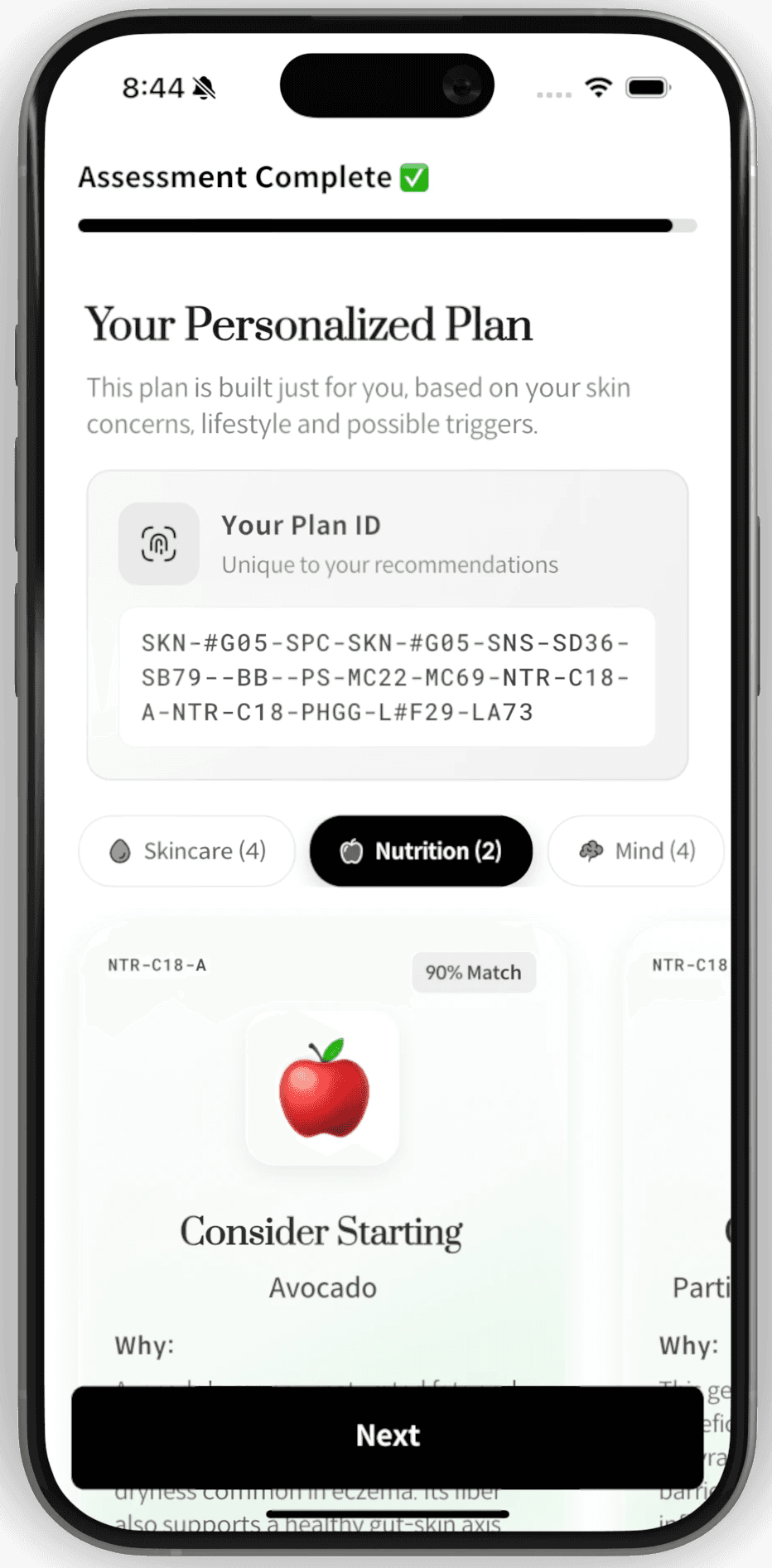
Symphony helps you know if Chocolate is your why.

Symphony helps you know if Chocolate is your why.

Symphony connects the dots between your skin condition and thousands of potential triggers, so you get a personalized plan to achieve lasting change.

Symphony connects the dots between your skin condition and thousands of potential triggers, so you get a personalized plan to achieve lasting change.

Symptom Improvement

Symptom Improvement

Symptom Improvement

>34%

>34%

>34%

Find a trigger within 7 days

Find a trigger within 7 days

Find a trigger within 7 days

92%

92%

92%

Premium UX Template for Framer

This content is for informational purposes only and is not medical advice. Food triggers are highly individual — a food appearing in this database does not mean it will cause your eczema to flare. The information presented is drawn from published clinical research and patient community reports, but it is not a substitute for professional diagnosis or treatment. If you suspect a food allergy or sensitivity, consult a dermatologist or allergist. The gold standard for identifying food triggers remains a supervised elimination diet with oral food challenges. Symphony is a tracking tool, not a diagnostic or medical device.

This content is for informational purposes only and is not medical advice. Food triggers are highly individual — a food appearing in this database does not mean it will cause your eczema to flare. The information presented is drawn from published clinical research and patient community reports, but it is not a substitute for professional diagnosis or treatment. If you suspect a food allergy or sensitivity, consult a dermatologist or allergist. The gold standard for identifying food triggers remains a supervised elimination diet with oral food challenges. Symphony is a tracking tool, not a diagnostic or medical device.