Eczema /

Eczema /

Triggers /

Triggers /

Black pepper

Black pepper

Spices

Spices

Spices

Black pepper & Eczema

Uncommon allergy but present in virtually all savoury food, making avoidance very difficult without cooking from scratch. The heat compound (piperine) is a mild irritant that can worsen the itch-scratch cycle.

🎯 Symphony Trigger Score

🎯 Symphony Trigger Score

1/5

Premium UX Template for Framer

Summary

Summary

Summary

Black pepper allergy is uncommon but likely underreported because pepper is so ubiquitous that people rarely think to eliminate it. It contains allergenic proteins and is a peripheral member of the celery-birch-mugwort-spice cross-reactivity pattern. Piperine — the compound that gives pepper its heat — is an irritant that can worsen the itch-scratch cycle in eczema, similar to capsaicin in chilli but milder.

In one study, 7.3% of over a thousand people reported reactions to pepper. The main practical challenge is that black pepper is in virtually every savoury dish — restaurant meals, pre-made sauces, spice blends, cured meats, and ready meals all contain it, making a meaningful elimination genuinely difficult without cooking everything from scratch.

Black pepper allergy is uncommon but likely underreported because pepper is so ubiquitous that people rarely think to eliminate it. It contains allergenic proteins and is a peripheral member of the celery-birch-mugwort-spice cross-reactivity pattern. Piperine — the compound that gives pepper its heat — is an irritant that can worsen the itch-scratch cycle in eczema, similar to capsaicin in chilli but milder.

In one study, 7.3% of over a thousand people reported reactions to pepper. The main practical challenge is that black pepper is in virtually every savoury dish — restaurant meals, pre-made sauces, spice blends, cured meats, and ready meals all contain it, making a meaningful elimination genuinely difficult without cooking everything from scratch.

Black pepper allergy is uncommon but likely underreported because pepper is so ubiquitous that people rarely think to eliminate it. It contains allergenic proteins and is a peripheral member of the celery-birch-mugwort-spice cross-reactivity pattern. Piperine — the compound that gives pepper its heat — is an irritant that can worsen the itch-scratch cycle in eczema, similar to capsaicin in chilli but milder.

In one study, 7.3% of over a thousand people reported reactions to pepper. The main practical challenge is that black pepper is in virtually every savoury dish — restaurant meals, pre-made sauces, spice blends, cured meats, and ready meals all contain it, making a meaningful elimination genuinely difficult without cooking everything from scratch.

The Details - Black pepper & Eczema

The Details - Black pepper & Eczema

The Details - Black pepper & Eczema

Reaction Timeline

Immediate (minutes to 2 hours), Delayed (12–72 hours)

Immediate (minutes to 2 hours), Delayed (12–72 hours)

IgE reactions are immediate. Contact sensitization (Type IV) reactions are delayed 24–72 hours. Irritant effects from piperine are immediate.


Premium UX Template for Framer

How Much Is Needed To React?

Dose-dependent

Dose-dependent

Dose-dependent

A light sprinkle of black pepper is very different from heavily seasoned dishes. Because black pepper is so ubiquitous in cooking, complete elimination is challenging. Try reducing quantity first rather than complete avoidance.

Does Preparation Matter?

Minimal difference

Minimal difference

Minimal difference

Piperine and allergenic proteins are heat-stable. Cooking does not meaningfully reduce black pepper's trigger potential. Ground pepper and whole peppercorns have the same allergenic potential. White pepper (same plant, outer layer removed) may have a slightly different profile. [20]


Premium UX Template for Framer

Also Watch Out For...

  1. Celery — celery-birch-mugwort-spice syndrome connection [20]

  2. Mugwort pollen — spice syndrome

  3. Other spices in the syndrome (cumin, coriander, anise)

  4. Pink peppercorn — NOT related (Anacardiaceae, related to cashew)

What To Use Instead

  1. White pepper (same plant but milder — if irritancy is the issue rather than allergy)

  2. Ginger (for warming flavor)

  3. Turmeric (for savory seasoning)

  4. Sumac (for tang without pepper heat)

Premium UX Template for Framer

Hidden Sources

  1. Nearly all savory restaurant food (black pepper is a default seasoning)

  2. Spice blends (curry powder, steak seasoning, lemon pepper)

  3. Salad dressings

  4. Deli meats and sausages (often seasoned with pepper)

  5. Pepper grinders at tables

  6. Some cosmetics (black pepper extract used in skincare)
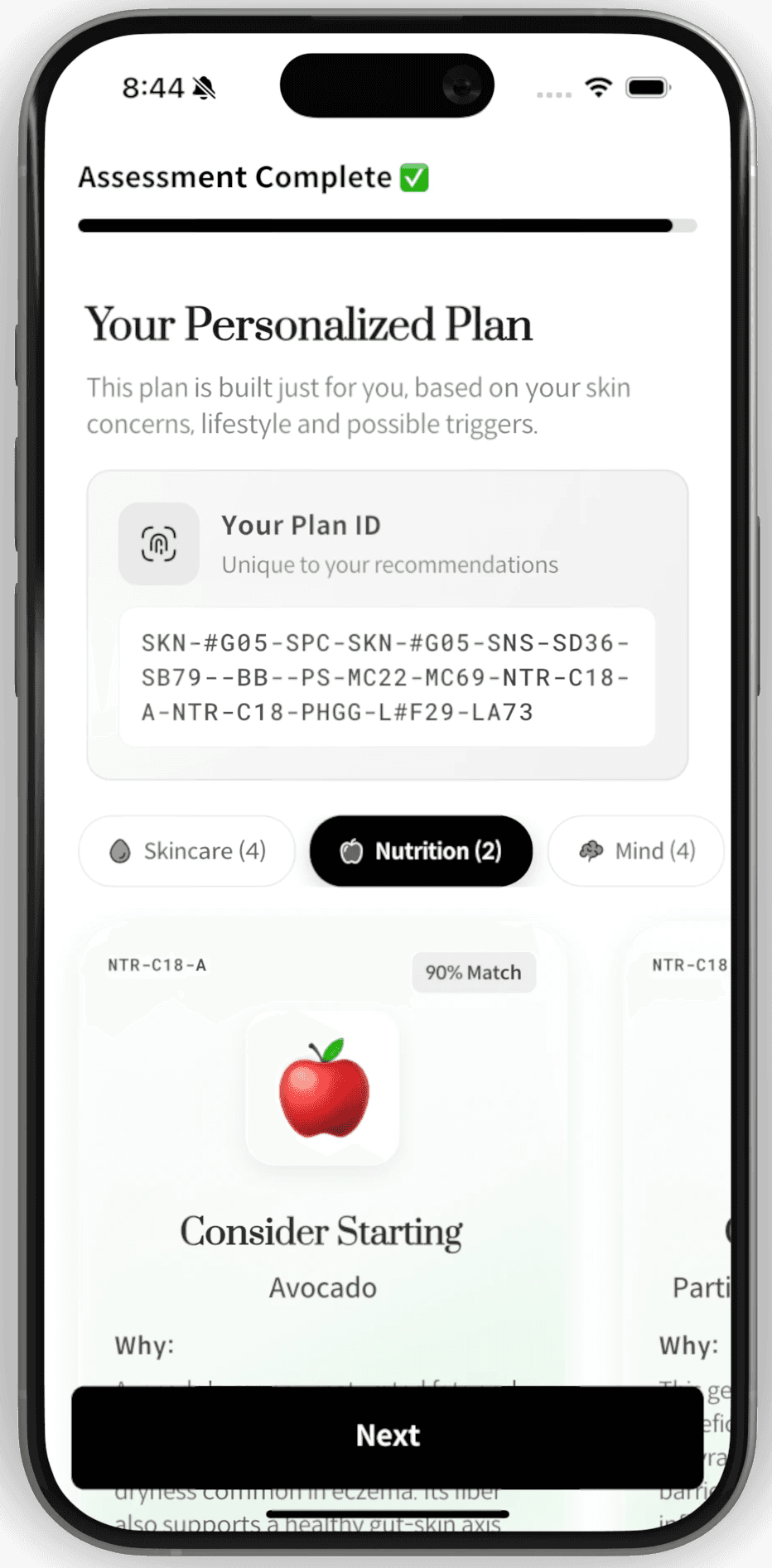
Symphony helps you know if Black pepper is your why.

Symphony helps you know if Black pepper is your why.

Symphony connects the dots between your skin condition and thousands of potential triggers, so you get a personalized plan to achieve lasting change.

Symphony connects the dots between your skin condition and thousands of potential triggers, so you get a personalized plan to achieve lasting change.

Symptom Improvement

Symptom Improvement

Symptom Improvement

>34%

>34%

>34%

Find a trigger within 7 days

Find a trigger within 7 days

Find a trigger within 7 days

92%

92%

92%

Premium UX Template for Framer

This content is for informational purposes only and is not medical advice. Food triggers are highly individual — a food appearing in this database does not mean it will cause your eczema to flare. The information presented is drawn from published clinical research and patient community reports, but it is not a substitute for professional diagnosis or treatment. If you suspect a food allergy or sensitivity, consult a dermatologist or allergist. The gold standard for identifying food triggers remains a supervised elimination diet with oral food challenges. Symphony is a tracking tool, not a diagnostic or medical device.

This content is for informational purposes only and is not medical advice. Food triggers are highly individual — a food appearing in this database does not mean it will cause your eczema to flare. The information presented is drawn from published clinical research and patient community reports, but it is not a substitute for professional diagnosis or treatment. If you suspect a food allergy or sensitivity, consult a dermatologist or allergist. The gold standard for identifying food triggers remains a supervised elimination diet with oral food challenges. Symphony is a tracking tool, not a diagnostic or medical device.

This content is for informational purposes only and is not medical advice. Food triggers are highly individual — a food appearing in this database does not mean it will cause your eczema to flare. The information presented is drawn from published clinical research and patient community reports, but it is not a substitute for professional diagnosis or treatment. If you suspect a food allergy or sensitivity, consult a dermatologist or allergist. The gold standard for identifying food triggers remains a supervised elimination diet with oral food challenges. Symphony is a tracking tool, not a diagnostic or medical device.