Eczema /

Eczema /

Triggers /

Triggers /

Beef

Beef

Meats

Meats

Meats

Beef & Eczema

Three distinct pathways: alpha-gal from tick bites (delayed 3–6 hours), milk protein cross-reactivity (well-done is safer than rare), and rare primary allergy. The timing of the reaction is the key diagnostic clue.

🎯 Symphony Trigger Score

🎯 Symphony Trigger Score

3/5

Premium UX Template for Framer

Summary

Summary

Summary

Beef can trigger eczema through three completely different pathways, which is why reactions to beef can look so different between individuals. The first pathway is alpha-gal syndrome — an allergy to a sugar molecule found in all mammalian meat, acquired from tick bites. Its hallmark is an unusual 3–6 hour delay between eating and reacting, which is why it is often missed. The second pathway involves a protein (BSA) shared between beef and cow's milk — about 73–93% of beef-allergic children also have milk allergy.

This protein is destroyed by thorough cooking, so well-done beef is much safer than rare for people with this milk-cross-reactive pattern. The third pathway is rare primary beef allergy unrelated to milk or ticks. The reaction timing is the most useful diagnostic clue: immediate reactions suggest milk cross-reactivity or primary allergy; reactions delayed by hours suggest alpha-gal syndrome.

Beef can trigger eczema through three completely different pathways, which is why reactions to beef can look so different between individuals. The first pathway is alpha-gal syndrome — an allergy to a sugar molecule found in all mammalian meat, acquired from tick bites. Its hallmark is an unusual 3–6 hour delay between eating and reacting, which is why it is often missed. The second pathway involves a protein (BSA) shared between beef and cow's milk — about 73–93% of beef-allergic children also have milk allergy.

This protein is destroyed by thorough cooking, so well-done beef is much safer than rare for people with this milk-cross-reactive pattern. The third pathway is rare primary beef allergy unrelated to milk or ticks. The reaction timing is the most useful diagnostic clue: immediate reactions suggest milk cross-reactivity or primary allergy; reactions delayed by hours suggest alpha-gal syndrome.

Beef can trigger eczema through three completely different pathways, which is why reactions to beef can look so different between individuals. The first pathway is alpha-gal syndrome — an allergy to a sugar molecule found in all mammalian meat, acquired from tick bites. Its hallmark is an unusual 3–6 hour delay between eating and reacting, which is why it is often missed. The second pathway involves a protein (BSA) shared between beef and cow's milk — about 73–93% of beef-allergic children also have milk allergy.

This protein is destroyed by thorough cooking, so well-done beef is much safer than rare for people with this milk-cross-reactive pattern. The third pathway is rare primary beef allergy unrelated to milk or ticks. The reaction timing is the most useful diagnostic clue: immediate reactions suggest milk cross-reactivity or primary allergy; reactions delayed by hours suggest alpha-gal syndrome.

The Details - Beef & Eczema

The Details - Beef & Eczema

The Details - Beef & Eczema

Reaction Timeline

Immediate (minutes to 2 hours), Delayed (12–72 hours)

Immediate (minutes to 2 hours), Delayed (12–72 hours)

This is critical for diagnosis: BSA-mediated reactions are immediate (minutes to hours). Alpha-gal reactions are characteristically DELAYED 3–6 hours. If you react to beef hours after eating it, consider alpha-gal syndrome — get tested for alpha-gal IgE and ask about tick bite history.


Premium UX Template for Framer

How Much Is Needed To React?

Dose-dependent

Dose-dependent

Dose-dependent

Alpha-gal reactions are dose-dependent — a small amount of beef may be tolerated while a large steak triggers a reaction. BSA-mediated allergy can be triggered by smaller amounts. Alpha-gal is a carbohydrate on mammalian meat, so it applies to ALL mammalian meats, not just beef.

Does Preparation Matter?

Yes — preparation significantly changes reactivity

Yes — preparation significantly changes reactivity

Yes — preparation significantly changes reactivity

BSA (Bos d 6) is heat-labile — well-done beef is MUCH less allergenic than rare beef for BSA-mediated allergy. However, alpha-gal is a carbohydrate, NOT a protein — it is NOT destroyed by cooking. Rare/medium-rare beef is riskier for BSA-pathway patients. For alpha-gal patients, no cooking method helps. [6][7]


Premium UX Template for Framer

Also Watch Out For...

  1. Cow's milk — shared BSA (Bos d 6); 73–93% of beef-allergic children also CMA [7]

  2. All mammalian meats (pork, lamb, venison, goat) — alpha-gal present in all mammals [6]

  3. Cat dander — BSA cross-reacts with Fel d 2 [7]

  4. Dog dander — BSA cross-reacts with Can f 3

  5. Gelatin — alpha-gal positive (mammalian collagen)

What To Use Instead

  1. Chicken or turkey (poultry does NOT contain alpha-gal)

  2. Fish (no alpha-gal, no BSA cross-reactivity)

  3. Plant-based meat alternatives (check for soy, wheat — on trigger list)

  4. Duck (poultry, alpha-gal-free)

Premium UX Template for Framer

Hidden Sources

  1. Beef broth and stock (concentrated BSA if not well-cooked)

  2. Gelatin (mammalian — alpha-gal positive)

  3. Beef-based pet food (handling exposure)

  4. Gravy and meat-based sauces

  5. Some medications (gelatin capsules — alpha-gal risk)

  6. Certain vaccines (gelatin-containing — alpha-gal risk)

  7. Beef tallow in some cooking

  8. Some cosmetics with lanolin (sheep-derived — alpha-gal positive)
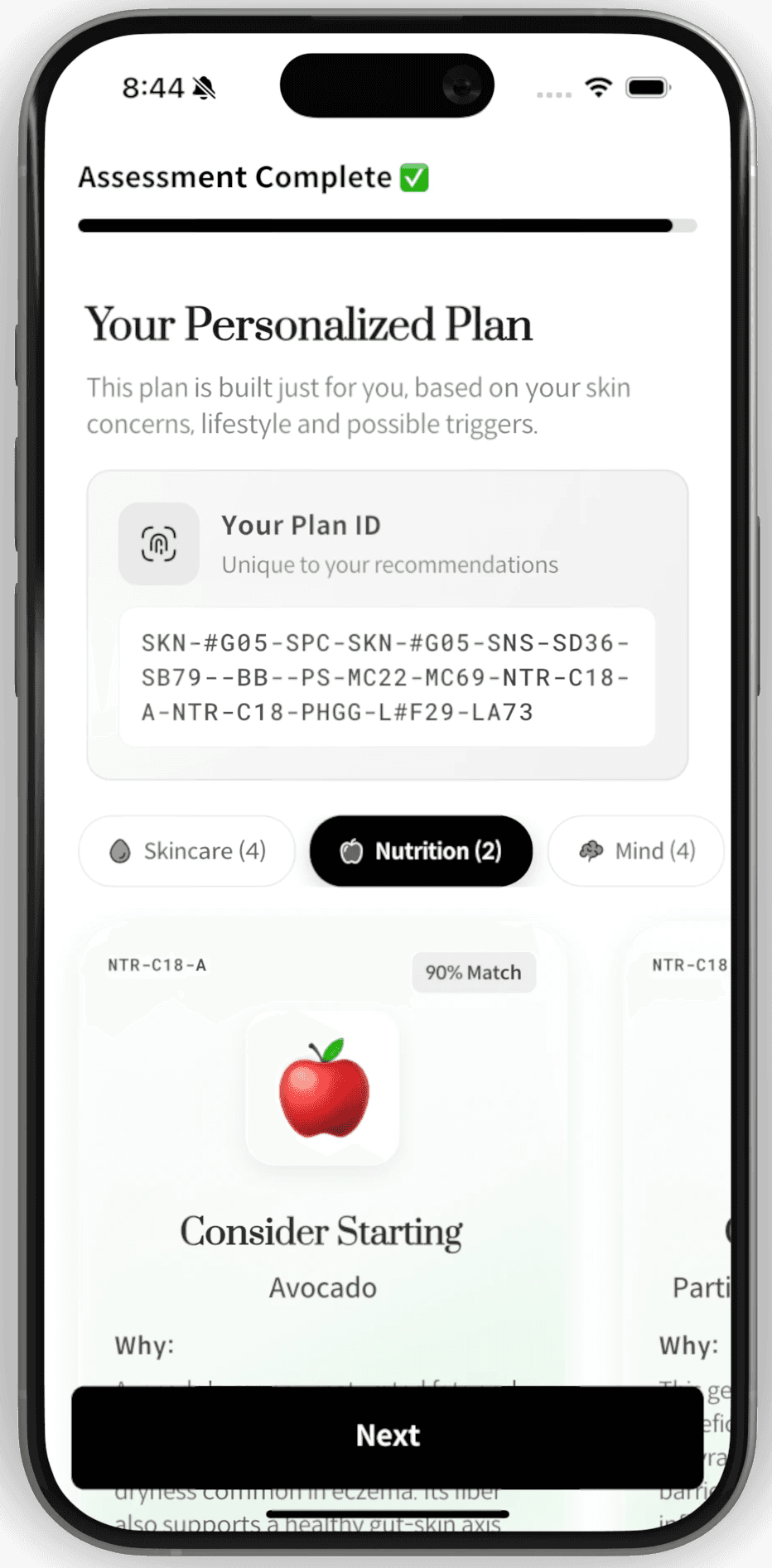
Symphony helps you know if Beef is your why.

Symphony helps you know if Beef is your why.

Symphony connects the dots between your skin condition and thousands of potential triggers, so you get a personalized plan to achieve lasting change.

Symphony connects the dots between your skin condition and thousands of potential triggers, so you get a personalized plan to achieve lasting change.

Symptom Improvement

Symptom Improvement

Symptom Improvement

>34%

>34%

>34%

Find a trigger within 7 days

Find a trigger within 7 days

Find a trigger within 7 days

92%

92%

92%

Premium UX Template for Framer

This content is for informational purposes only and is not medical advice. Food triggers are highly individual — a food appearing in this database does not mean it will cause your eczema to flare. The information presented is drawn from published clinical research and patient community reports, but it is not a substitute for professional diagnosis or treatment. If you suspect a food allergy or sensitivity, consult a dermatologist or allergist. The gold standard for identifying food triggers remains a supervised elimination diet with oral food challenges. Symphony is a tracking tool, not a diagnostic or medical device.

This content is for informational purposes only and is not medical advice. Food triggers are highly individual — a food appearing in this database does not mean it will cause your eczema to flare. The information presented is drawn from published clinical research and patient community reports, but it is not a substitute for professional diagnosis or treatment. If you suspect a food allergy or sensitivity, consult a dermatologist or allergist. The gold standard for identifying food triggers remains a supervised elimination diet with oral food challenges. Symphony is a tracking tool, not a diagnostic or medical device.

This content is for informational purposes only and is not medical advice. Food triggers are highly individual — a food appearing in this database does not mean it will cause your eczema to flare. The information presented is drawn from published clinical research and patient community reports, but it is not a substitute for professional diagnosis or treatment. If you suspect a food allergy or sensitivity, consult a dermatologist or allergist. The gold standard for identifying food triggers remains a supervised elimination diet with oral food challenges. Symphony is a tracking tool, not a diagnostic or medical device.